

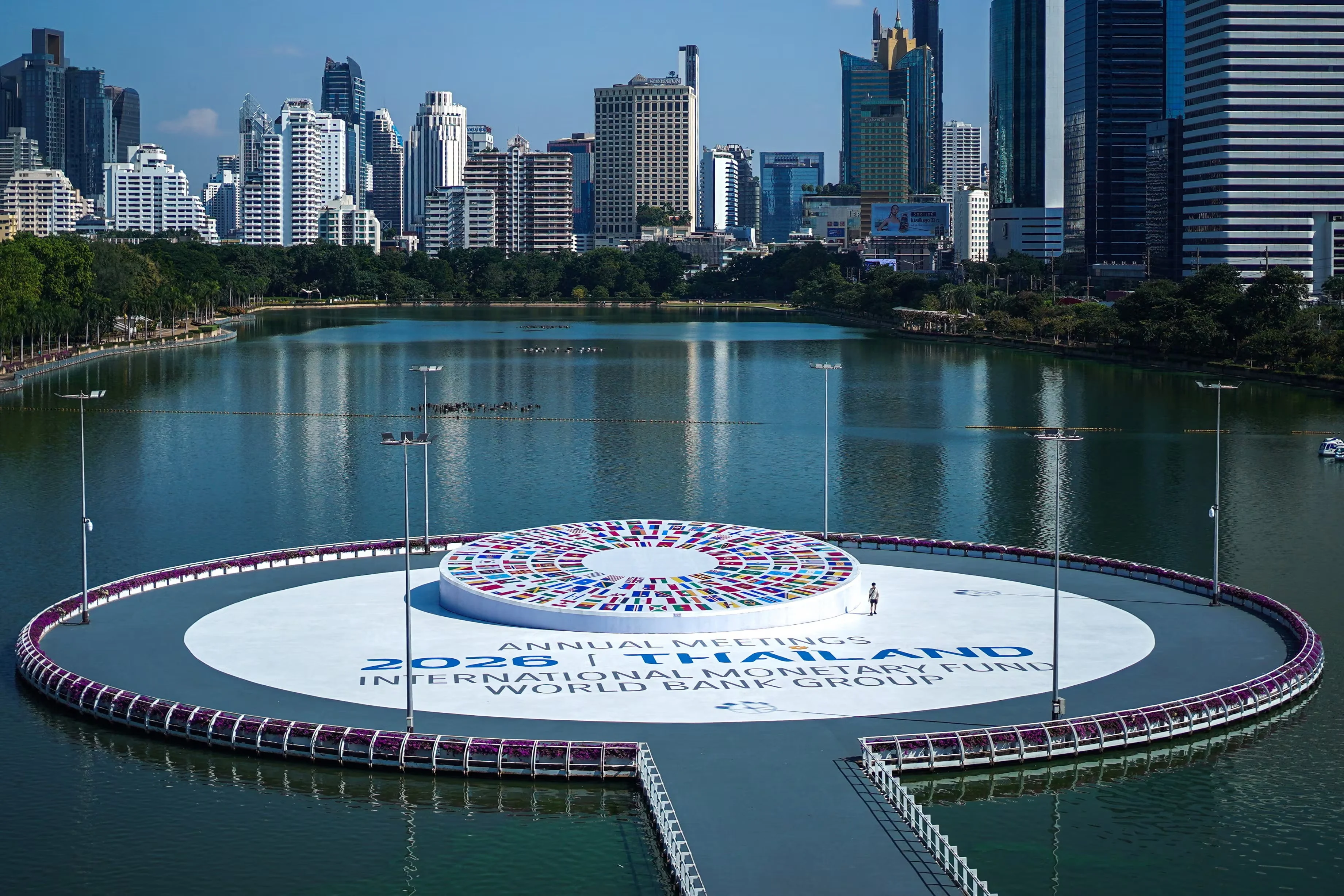
Finance officials are preparing for the annual meetings of the International Monetary Fund and World Bank as conflict in the Middle East puts pressure on the global economy. The meetings will take place in Bangkok against a backdrop of high energy prices, rising interest costs, and growing public debt. Officials are expected to discuss how countries can protect economic growth while dealing with the effects of war and supply disruptions.
The conflict involving the United States, Israel, and Iran has caused a major shock to energy markets. The closure of the Strait of Hormuz has disrupted a route that normally carries a large share of the world’s oil supply. Fuel and fertilizer prices have risen, adding costs for transport, farming, manufacturing, and household spending. These increases can spread through the economy because energy is needed to produce and move many basic goods.
World Bank President Ajay Banga has warned that several pressures are building at the same time. Energy costs, fertilizer prices, and the risk of an unusually strong El Niño weather pattern could worsen hardship. Higher food prices may hit poorer households especially hard, while governments could find it difficult to provide support if their budgets are already under strain.
Public debt is another major concern. Governments have borrowed heavily over recent years, and the cost of paying interest is rising. The IMF has warned that global public debt is moving toward levels not seen since the period around the Second World War. For many developing countries, interest payments already take up a large share of government income, leaving less money for schools, hospitals, transport, and other public services.
Countries with weaker finances may face pressure to reduce spending or raise taxes. Such steps can help control debt, but they can also trigger public anger when households are already struggling with high prices. Some governments are asking for debt relief, yet support for broad payment suspensions appears limited among major economies.
The meetings will also test cooperation among countries that disagree over security and trade. The US Treasury secretary is not expected to attend, a decision that may disappoint some officials as tensions grow over the Iran war and Ukraine. The absence could make negotiations harder at a time when coordinated action is needed.
The outlook remains uncertain. The IMF has kept its 2026 global growth forecast near 3%, but it is watching the impact of the war closely. A lasting energy disruption could force further cuts to forecasts and deepen hardship. Officials will need to consider both immediate relief and longer-term steps that make economies less vulnerable to future shocks.
