

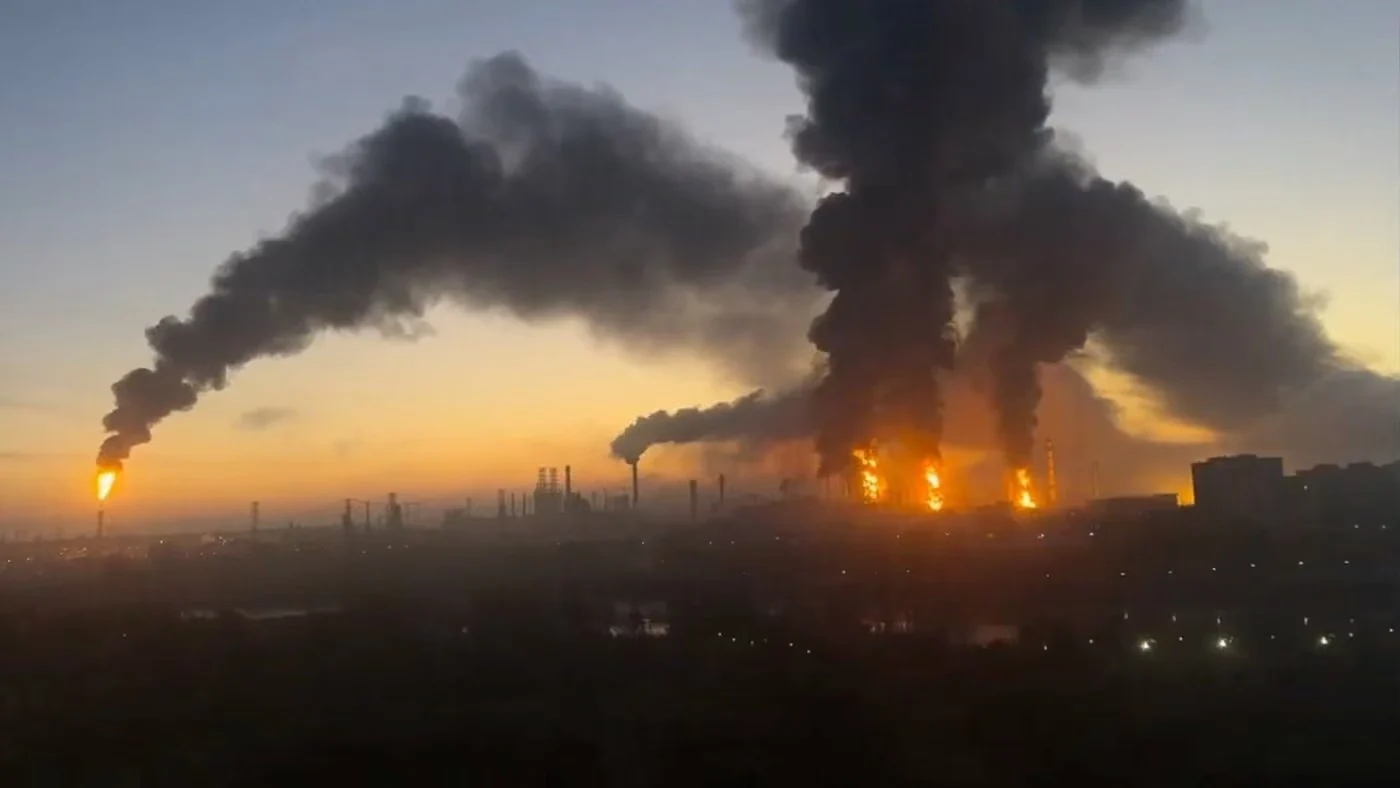
Ukraine says it plans to increase attacks on Russian oil refineries and other energy sites after Moscow expanded its air campaign against Ukrainian cities. President Volodymyr Zelenskiy said on October 4 that Kyiv would respond to what he called a new Russian approach to the war.
The statement comes as Russian forces continue to strike Ukrainian cities and key infrastructure. Moscow says its attacks are aimed at military targets and are part of a response to Ukrainian attacks. Kyiv says Russia is using air strikes to put pressure on civilians and damage the country’s ability to function.
Zelenskiy said Ukraine would focus more on Russian energy facilities. Refineries are important because they turn crude oil into fuels used by cars, industry and the military. Damage to these sites can reduce fuel supplies and force Russia to move products over longer distances.
Ukraine has carried out a growing number of long range drone attacks inside Russia. Some have targeted oil refineries, fuel depots and other energy sites. Kyiv says these attacks are meant to reduce Russia’s ability to finance and support the war.
The new statement suggests that Ukraine may continue this strategy even as some Western governments worry about the effect on global energy prices. Oil markets have already faced pressure because of the wider conflict in the Middle East and concerns about supply.
US President Donald Trump has urged Ukraine not to attack Russian energy infrastructure. Washington has also continued to push for a path toward talks. Zelenskiy, however, says there is little sign that Russia is ready to accept a serious peace process.
The Ukrainian leader has also stressed the need for stronger air defenses. Russian drones and missiles have become a major threat to Ukrainian cities. Kyiv wants more systems that can detect and destroy incoming weapons before they reach civilian areas.
The war remains spread across a front line of more than 1,000 kilometers. Neither side has achieved a final breakthrough. Russia has more manpower and weapons, while Ukraine continues to depend on Western military and financial support.
Ukraine has also reported progress in some areas. Zelenskiy said Ukrainian forces had taken back territory in the Donbas region during a recent counteroffensive. Russia disputes many Ukrainian battlefield claims, and independent verification can be difficult during active fighting.
The energy issue has become one of the most important parts of the conflict. Russia is a major oil producer, and any large disruption to its energy industry could affect world prices. That makes Ukrainian strikes a concern far beyond the battlefield.
European governments are also trying to maintain support for Ukraine while protecting their own economies. The European Union has pledged further financial support, but countries must balance defense spending with pressure on public budgets.
The October 4 warning shows that the war is entering another difficult phase. Russia continues to use large numbers of drones and missiles, while Ukraine is seeking ways to strike deeper behind Russian lines.
For Ukraine, attacking energy facilities is a way to put pressure on Russia. For Moscow, protecting those sites will remain a major military task. Unless diplomatic efforts produce a breakthrough, energy infrastructure is likely to remain a central target in the war.
