

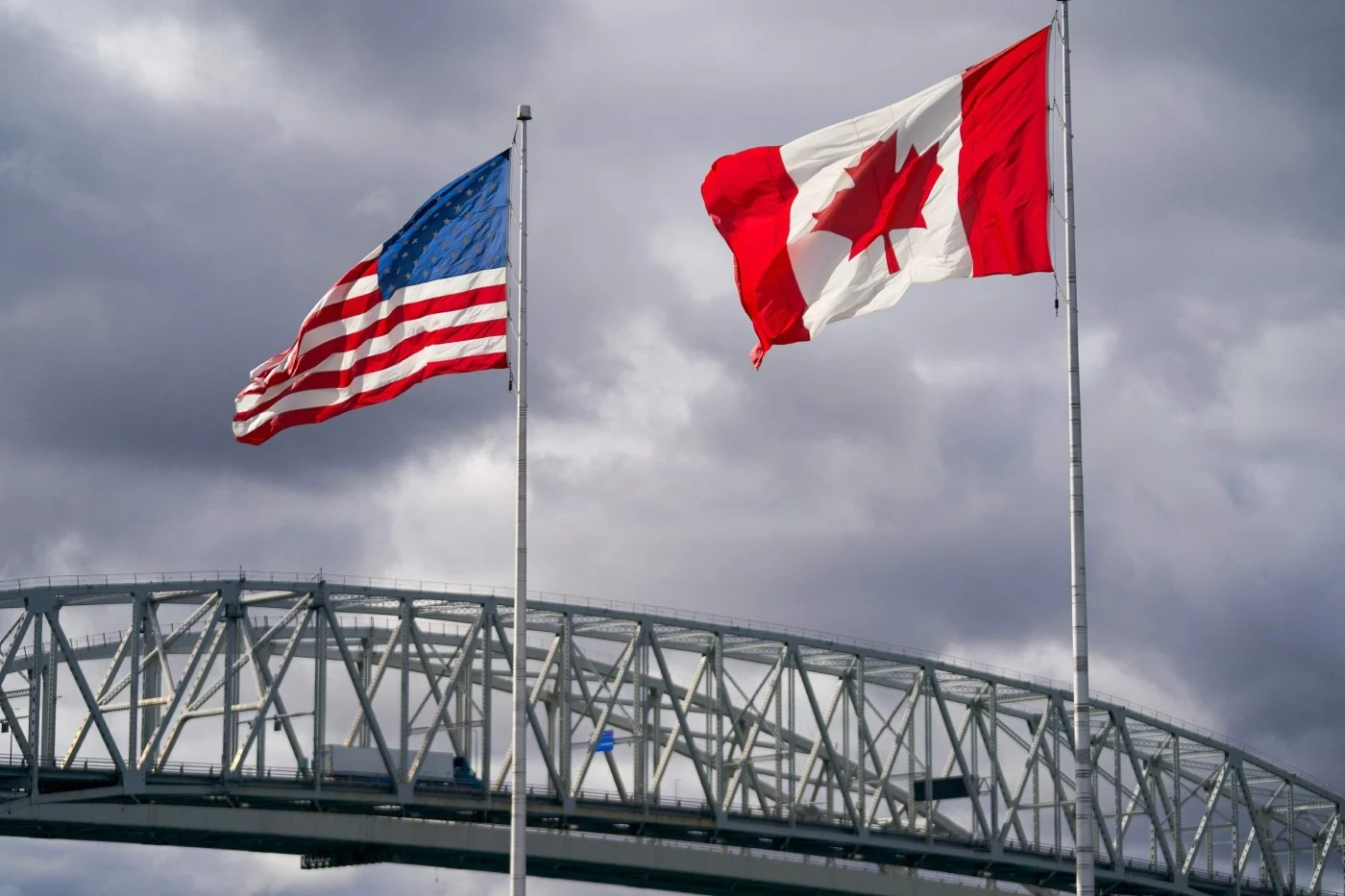
A sweeping American ban on the import of numerous Canadian products takes effect today, marking a significant escalation in the months-long trade dispute between the two historically close allies. The restrictions, which President Trump signed into executive orders earlier this month, prohibit the import of most Canadian alcoholic beverages, certain dairy products including whey, cane molasses, and both motorcycles and mopeds, replacing what had previously been a fifty percent tariff on many of these same product categories.
The ban’s implementation today follows Canada’s own retaliatory tariffs, which took effect earlier this month on approximately twenty-eight billion Canadian dollars worth of American goods, targeting a broad range of products including furniture, household appliances, beauty products, clothing, and agricultural equipment. This tit-for-tat pattern of escalating trade measures has continued deepening a rift between countries that have historically maintained one of the world’s most extensive and mutually beneficial trading relationships, built over decades of close economic integration across numerous industries.
American trade officials have justified the shift from tariffs to outright bans by pointing specifically to actions taken by several Canadian provinces, which removed American alcoholic beverages from provincially operated liquor stores in response to earlier rounds of American tariffs. A senior administration official explained that pursuing complete bans, rather than simply higher tariffs, reflects a more direct response to what Washington characterizes as unfair discriminatory treatment of American products within Canada’s own retail and distribution systems.
Beyond the outright bans, the White House has also modified and extended tariffs on other Canadian products effective from earlier this month, adding all-terrain vehicles and animal hides to the list of goods facing steep tariffs while removing rock salt and cement from that same list. This kind of ongoing adjustment to the specific scope of trade measures illustrates the genuinely fluid and evolving nature of this dispute, with both governments continuing to calibrate their respective positions even as the overall trajectory has trended firmly toward escalation rather than resolution.
Canadian Prime Minister Mark Carney addressed the situation directly in a video statement, acknowledging that his country’s necessary move away from relying on the United States as its largest trading partner would come at a genuine economic cost. This candid acknowledgment reflects the difficult position Canada finds itself navigating, needing to respond forcefully enough to protect domestic industries and political credibility while recognizing the substantial economic disruption that reduced integration with its largest historical trading partner will likely produce across numerous sectors of the Canadian economy.
Industry representatives on both sides of the border have expressed considerable concern about the practical impact of these measures on businesses that have built supply chains and customer relationships across the shared border over many years. Canadian alcohol producers, motorcycle manufacturers, and dairy processors now face the challenge of finding alternative markets for products previously destined for American consumers, while American consumers and businesses that relied on Canadian imports must similarly adjust to reduced availability of these specific product categories.
As these new restrictions take effect today, both governments have indicated some interest in eventually resolving the broader dispute, though officials note that no new formal trade negotiations have been scheduled since talks collapsed in late August. Whether today’s escalation ultimately proves to be a peak in tensions that eventually gives way to renewed negotiation, or simply another step in a continuing pattern of escalating trade restrictions between the two countries, remains a question that will likely only be answered through the actions both governments take in the weeks and months following today’s implementation.
