

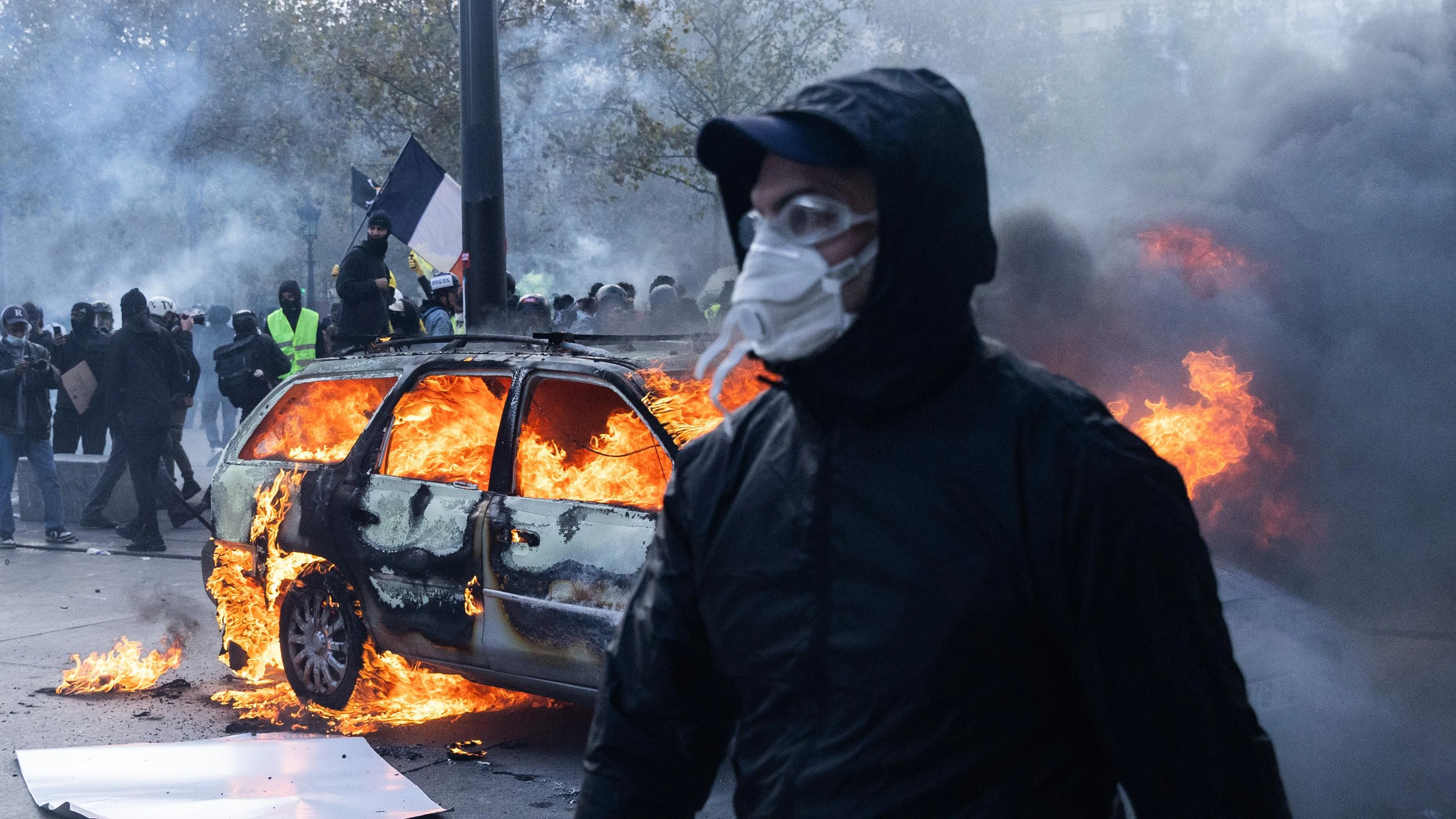
France is facing a serious public order challenge after large demonstrations over living costs and public services escalated into violence across several cities. Authorities reported more than 1,800 arrests and hundreds of injured police officers, gendarmes and firefighters. The unrest began with student protests but spread as wider frustration over inequality and government services brought more people into the streets.
Paris saw some of the largest disturbances, with police using tear gas and arresting hundreds of people. Other cities, including Marseille, Lyon and Bordeaux, also reported looting, fires and damage to public buildings. In Limoges, a historic town hall was heavily damaged by fire, prompting concern over the loss of an important civic building.
The demonstrations were linked to concerns about the cost of living, school conditions and public services. Students had raised complaints about teacher shortages and deteriorating facilities, while other protesters pointed to rising household bills and a lack of investment in poorer communities. The protests quickly became a wider expression of anger over economic pressure and political decisions.
French officials condemned the violence and said those responsible for attacks and looting would face legal consequences. The government has also faced questions about how police responded and whether force was used appropriately. Rights groups have called for investigations into reports of injuries during crowd control operations.
The scale of the unrest presents a challenge for Prime Minister Sébastien Lecornu and President Emmanuel Macron. Authorities must restore order while also responding to the concerns that brought people onto the streets. A heavy-handed response could deepen anger, but failing to protect residents and public property could weaken confidence in the state.
Businesses in affected areas have suffered damage and disruption. Shops were looted or forced to close, while transport and public services faced interruptions. Small business owners may struggle to recover from lost sales and repair costs, particularly if the unrest continues over several days.
The protests also reflect wider tensions across Europe, where many households are struggling with housing costs, inflation and pressure on public services. Demonstrations in other countries have focused on similar concerns, though the scale and form of unrest have differed.
The French government now faces the task of separating peaceful protest from criminal violence while addressing the underlying grievances. Investigations into damage and injuries will be important, but so will practical steps to improve schools, public services and economic security. Without progress on those issues, anger may return even after the streets become calm.
