

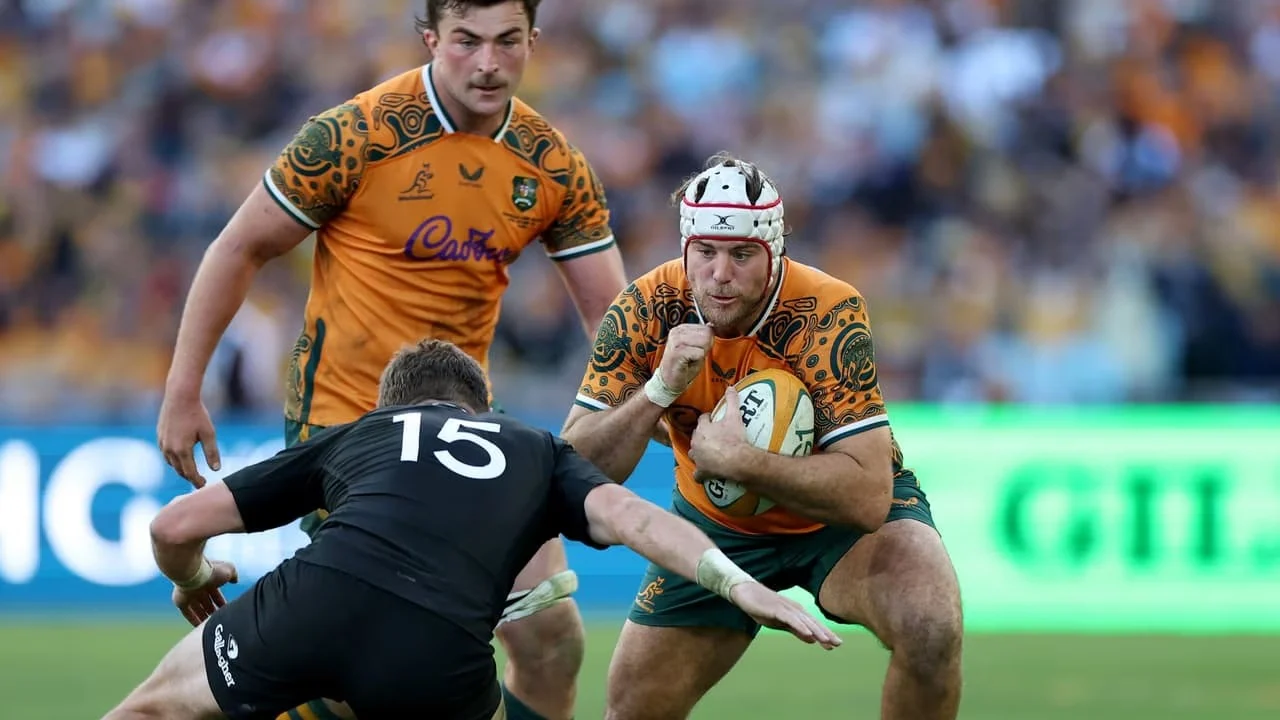
New Zealand has strengthened its position in the rugby rivalry with Australia after a 41–23 victory over the Wallabies. The All Blacks produced a powerful first half, scoring six tries and putting Australia under sustained pressure. The result reflected a clear plan to move the ball quickly, win physical contests and limit the influence of Australia’s key players.
Coach Dave Rennie said the team had focused on reducing the impact of Wallabies flanker Fraser McReight. Rennie described McReight as an outstanding player at the breakdown, where teams compete to win possession after a tackle. The All Blacks aimed to make cleaner carries and maintain momentum so Australia would have fewer chances to disrupt their attacks.
New Zealand’s performance was built around speed and direct running. The forwards created opportunities by carrying the ball with force, while the backs took advantage of space when Australia’s defence began to stretch. The six first-half tries gave the visitors a strong lead and left Australia with a difficult task after the break.
The Wallabies improved in the second half and scored points of their own, but the gap proved too large to close. Australia’s late response showed that the team could still create pressure, although the early defensive problems had already shaped the match. Coaches will now review the opening period to understand why the side struggled to contain New Zealand.
The result also reflects the different stages of development for the two teams. New Zealand is working to build consistency under Rennie, while Australia is trying to strengthen its squad ahead of the next major international challenges. Injuries, selection choices and the need for younger players to gain experience remain important factors for both sides.
Rugby matches between the countries carry a long history and often provide a useful test of progress. A strong performance can lift confidence, but coaches must avoid assuming that one result guarantees future success. Opponents study successful tactics and look for ways to counter them in the next meeting.
For New Zealand, the focus will be on maintaining the quality of its attacking play while improving discipline and defence. For Australia, the priority is to reduce early errors and ensure that its strongest players can influence the game. The rivalry is likely to remain intense as both teams prepare for the next stage of their international campaigns.
