

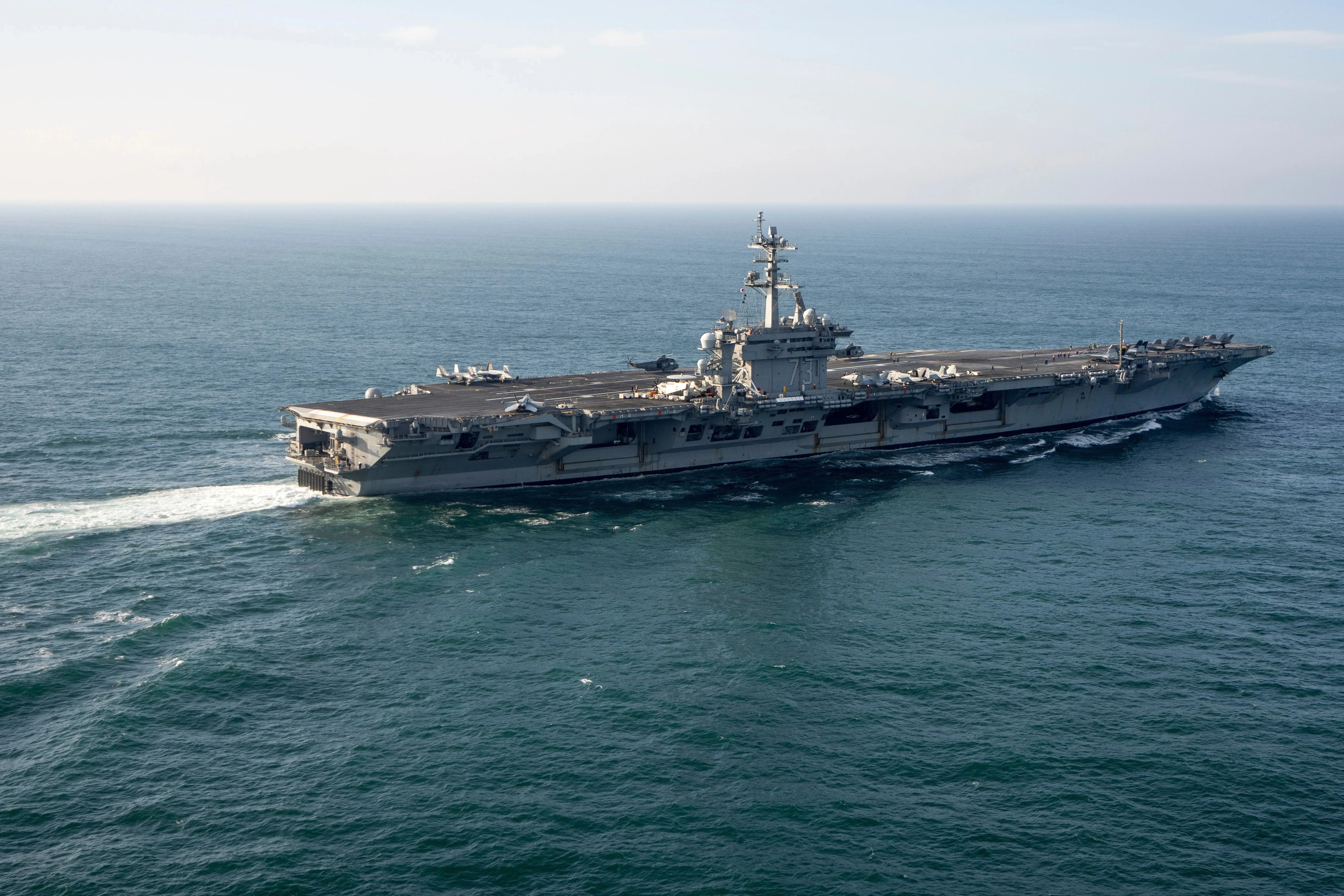
A major US aircraft carrier arrived near Thailand on October 4 after months of supporting American military operations in the Middle East. The USS George H W Bush reached waters near Phuket with about 4,800 people on board. The stop gives the crew time to rest after a long period of duty in a tense region.
The carrier has been part of the large US military presence linked to the conflict in the Middle East. Its deployment reflects the wider role of American naval forces in protecting US interests and supporting operations during a period of high tension.
The arrival in Thailand is not being described as a new combat move. Instead, it is a rest and recreation stop for the crew. The visit also shows how military forces that serve in one region can later move through the wider Indo Pacific area.
The Middle East remains a major concern for Washington. Fighting and threats involving Iran, Israel, Yemen and other regional actors have placed pressure on the United States to maintain strong military forces in the area. American ships and aircraft have played a key role in protecting forces and responding to threats.
The carrier carries thousands of sailors and other personnel. Keeping such a large ship at sea for months is demanding. Crew members work long shifts and remain ready for sudden orders. A short period away from combat duties can help improve morale and prepare the force for future missions.
The Thailand visit also has a wider regional meaning. The United States has been increasing its focus on the Indo Pacific as tensions with China remain an important part of its foreign policy. A US carrier operating in Asia can therefore have both a practical and political role.
Washington has long viewed its military presence in the region as a way to support allies and keep major sea routes open. Thailand is a long-standing US security partner. Visits by American ships also help maintain military ties between the two countries.
At the same time, the movement of the carrier comes as American forces remain closely linked to the Middle East. The US has had to balance its attention between several major security issues. The Middle East requires military resources, while China and the wider Indo Pacific remain central to US planning.
The carrier’s movement also highlights the global nature of modern naval operations. A large US warship can move from one region to another without returning home. Its crew may spend months far from their families while supporting different missions.
For the sailors aboard the George H W Bush, the Phuket stop is likely to offer a rare break. For governments in Asia, however, the visit is also a reminder of the scale of American naval power.
The October 4 arrival does not signal an end to US activity in the Middle East. Instead, it shows a force moving between missions and regions. With tensions still high, Washington will continue to watch developments in both the Middle East and Asia closely.
