

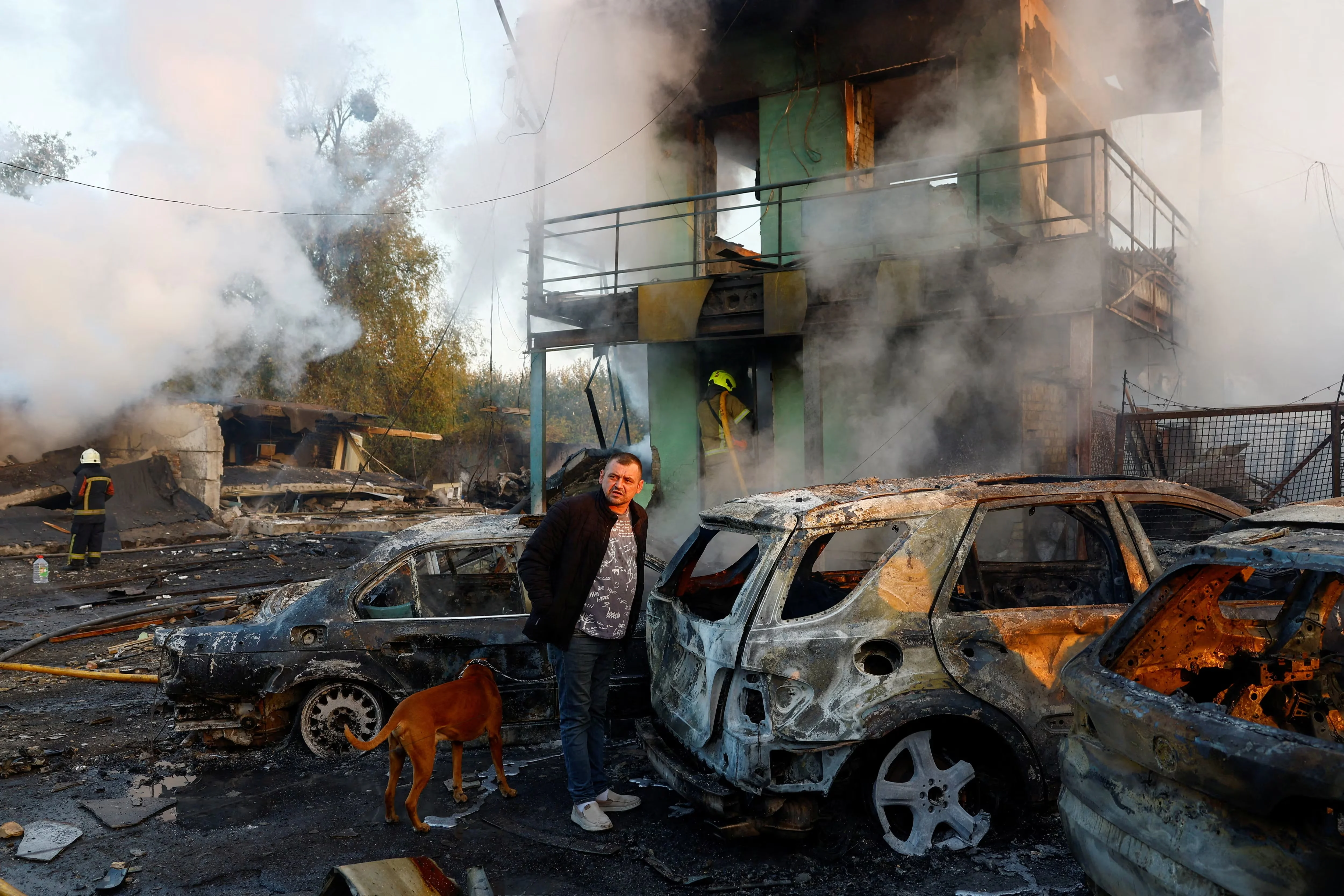
Russia launched one of its biggest attacks on Ukraine in recent weeks on October 7, killing at least eight people and damaging homes, buildings and industrial sites across several regions. The attack used a large mix of drones and missiles. Ukrainian officials said the strikes hit areas including Kyiv, Poltava, Dnipropetrovsk and Kharkiv. The attack came as the war continued to place heavy pressure on Ukraine’s air defenses and civilian infrastructure.
Ukrainian officials said Russia used about 130 drones along with 48 cruise missiles and ballistic missiles during the overnight attack. The Ukrainian air force said it was able to intercept 161 aerial targets. Even so, several weapons reached their targets and caused serious damage. Residential areas were among the places hit, raising fresh concerns about the safety of civilians who have lived under repeated air attacks since the start of the full scale war.
The worst reported damage came in the city of Pryluky, where a residential building was struck. Four people were killed there and at least 20 others were injured, according to local officials. Rescue teams searched damaged buildings for people who might still have been trapped under the remains. Other deaths were reported in Kyiv and the Poltava region. Emergency workers continued to inspect damaged areas as officials warned that the final number of casualties could rise.
Russia said its forces were targeting military and industrial facilities linked to Ukraine’s defense effort. Russian officials pointed to sites connected with Fire Point, a Ukrainian defense company that has developed its own missile systems. Moscow has often said that its attacks are aimed at military targets rather than ordinary people. Ukraine, however, has repeatedly accused Russia of striking civilian areas and energy sites as part of a wider campaign to weaken the country.
The attack also forced many people to seek shelter during the night. In Kyiv, residents used underground metro stations as places of safety while explosions and air defense activity were reported across the city. The use of underground stations has become a familiar part of life in the Ukrainian capital during major attacks. Local authorities again urged residents to follow air raid warnings and avoid damaged areas until emergency teams had completed their work.
The latest strikes come at a difficult time for Ukraine. The country needs a steady supply of air defense systems to protect cities, power facilities and other important sites. Russian missile and drone attacks have also placed pressure on Ukraine’s ability to protect its energy network. The repeated attacks mean that even when some weapons are stopped, a large number of missiles and drones can still stretch defenses across a wide area.
The October 7 attack showed how quickly the war can again reach civilian communities. Ukraine’s ability to intercept many of the incoming weapons helped reduce the scale of the damage, but the deaths and injuries showed the limits of air defense. As the fighting continues, Ukrainian officials are expected to keep asking allies for more systems, missiles and other support. For people living in the affected regions, the latest attack was another reminder that the danger of the war remains very real.
