

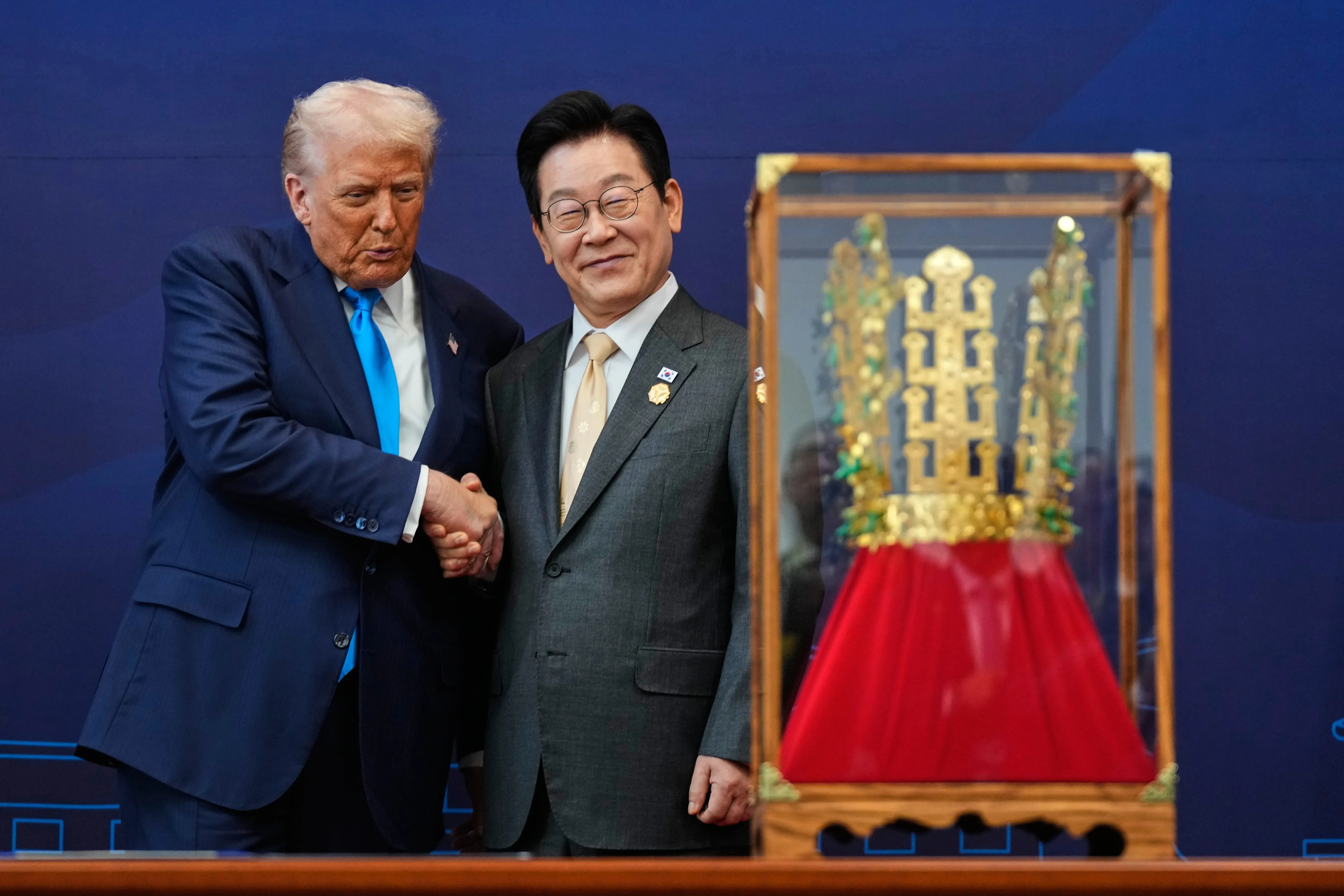
President Trump announced Wednesday that South Korea has committed to investing as much as two hundred billion dollars across several major American infrastructure projects, marking the first concrete package to emerge from a broader strategic investment agreement the two countries finalized last year. Speaking from the Oval Office, Trump described the package as transforming earlier diplomatic commitments into what he called tremendous construction projects capable of creating tens of thousands of American jobs.
The centerpiece of the announcement involves a potential fifty-four billion dollar South Korean investment in the long-discussed Alaska liquefied natural gas project, an ambitious pipeline initiative designed to transport gas from Alaska’s North Slope more than eight hundred miles south for eventual export to Asian markets. The project has faced a difficult history, having previously been abandoned by major energy companies roughly a decade ago due to persistent questions about its commercial feasibility.
Commerce Secretary Howard Lutnick, who joined Trump for the announcement, confirmed that beyond the Alaska project, South Korea has agreed to invest in a large natural gas power facility in Texas along with the construction of eight substantial nuclear power plants to be built across several American states. These combined energy investments represent a significant expansion of the broader economic partnership the two nations negotiated as part of last year’s trade agreement.
Despite the scale of Wednesday’s announcement, South Korean officials have indicated that not every element of the package has been fully finalized, with Seoul’s government reportedly continuing to review the Alaska project’s commercial viability and relevant domestic legal requirements before making a final commitment. This apparent gap between the American and South Korean characterizations of the deal’s status has drawn attention from analysts tracking the complex negotiation.
The broader investment framework stems from a trade agreement South Korean President Lee Jae-myung and Trump reached during their summit held in South Korea last October, under which Seoul committed to a combined three hundred fifty billion dollars in American investment across shipbuilding and strategic sectors in exchange for more favorable tariff treatment. Wednesday’s announcement represents the first detailed rollout of specific projects falling under that broader strategic investment commitment.
Energy analysts note that successfully reviving the Alaska LNG project after its earlier commercial setbacks would represent a significant achievement, potentially providing Asian energy importers including South Korea, Japan, and Taiwan with an additional and geographically convenient supply source for liquefied natural gas. However, the project’s substantial scale and long history of financing challenges mean its ultimate completion remains far from guaranteed even with this fresh round of international investment interest.
As details of this investment package continue emerging in the coming weeks, both governments appear to be treating Wednesday’s announcement as a significant milestone in their broader economic partnership, even while acknowledging that substantial work remains before these ambitious infrastructure projects move from announcement to actual construction. The coming months will likely reveal how quickly South Korea’s government can resolve its remaining questions about the Alaska project specifically.
