

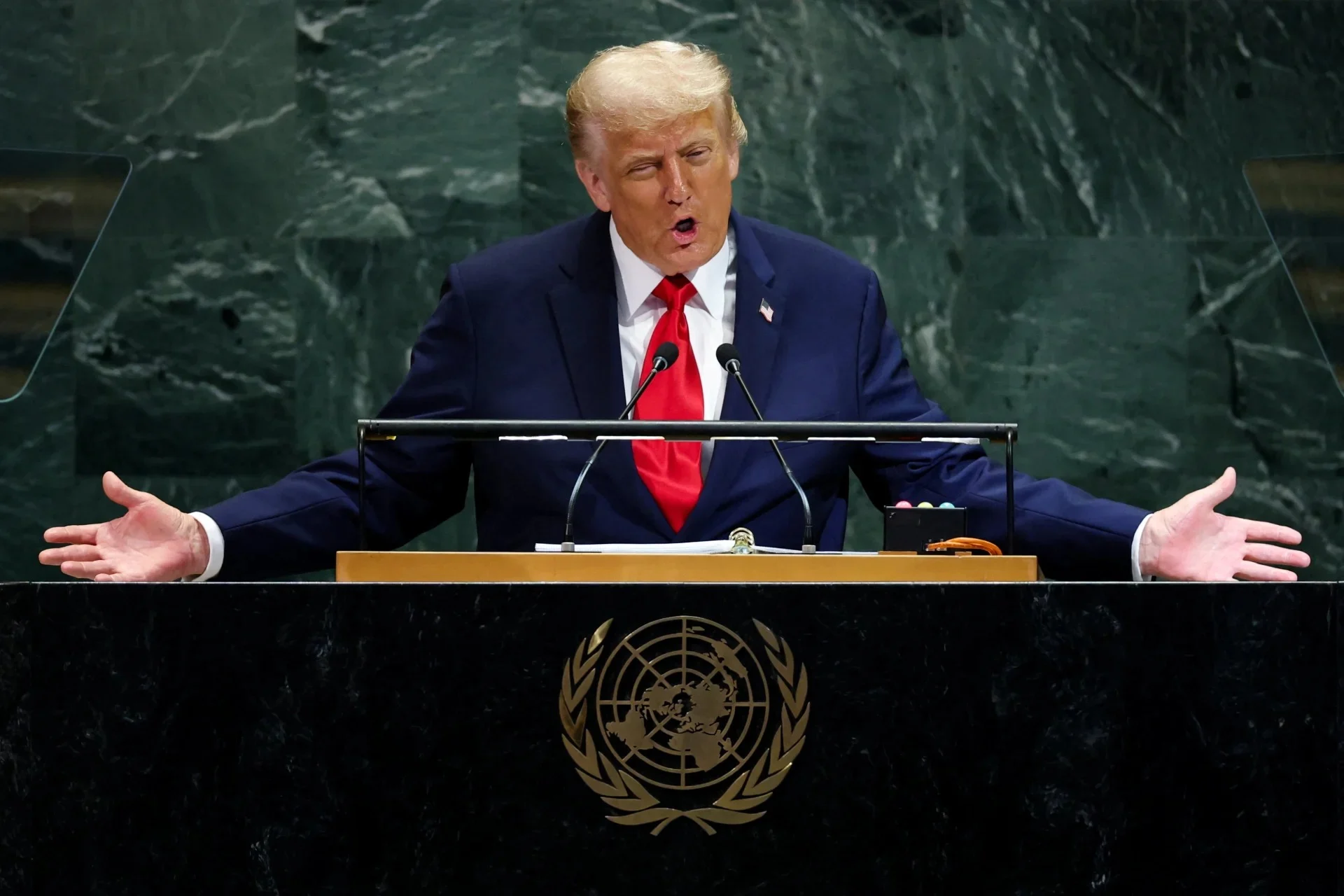
President Trump is addressing the United Nations General Assembly today as high-level week gets underway in New York. World leaders from across the globe are gathering for a stretch of speeches and closed-door meetings. This year’s session comes during a period of heightened tension in the Middle East.
Ahead of his remarks, Trump is also set to hold a multilateral meeting with leaders from the Gulf Cooperation Council. The group includes Bahrain, Kuwait, Oman, Qatar, Saudi Arabia, and the United Arab Emirates. Officials say the main focus of that meeting will be determining next steps regarding Iran.
Tensions in the region have grown sharply in recent days. A Houthi attack on Saudi Arabia’s main international airport over the weekend added fresh urgency to the discussions. Officials say Iran is expected to be a key topic throughout this year’s gathering, given its central role in regional instability.
As in the previous year, the United States has again denied entry visas to the Palestinian Authority president and his delegation. This decision has drawn criticism from some diplomats who argue it limits full participation in the assembly. Officials defending the move have not offered extensive public explanation for the repeated decision.
Trump has been an outspoken critic of the United Nations throughout his time in office. He has previously questioned the organization’s effectiveness at resolving international conflicts. His administration has also pulled funding from several UN-affiliated organizations since taking office.
Despite this criticism, Trump’s participation in high-level week remains closely watched by diplomats and analysts. His remarks often set the tone for how the United States approaches key global issues in the months ahead. This year’s speech is expected to touch on trade, security, and the ongoing situation in the Middle East.
The broader gathering will run for more than a week, with dozens of world leaders scheduled to speak. Discussions on ending regional conflicts are expected to dominate much of the agenda. Officials from multiple countries have said they hope this year’s meetings can produce meaningful progress.
Security around the city has been heightened significantly during this period. Road closures and increased police presence are common every year during high-level week. Local officials say residents and visitors should expect delays throughout the coming days.
Beyond the formal speeches, many of the most consequential conversations tend to happen in private meetings on the sidelines. Diplomats often use this week to build relationships and coordinate on shared priorities. These informal discussions can shape international relations well beyond the assembly itself.
This year’s session also comes just two days before a major bilateral summit. Later this week, Trump is set to welcome China’s president to Washington for a historic state visit. Analysts say the timing places extra weight on this week’s diplomatic activity.
Global attention remains fixed on New York as the week unfolds. The discussions taking place here could influence international relations for months to come. Many observers say the coming days will offer an early signal of how major powers plan to navigate an increasingly unstable world.
For now, officials across multiple governments say they are approaching the week with cautious optimism. Whether that optimism translates into concrete progress remains to be seen. The results of this week’s discussions are expected to become clearer as the assembly continues.
