

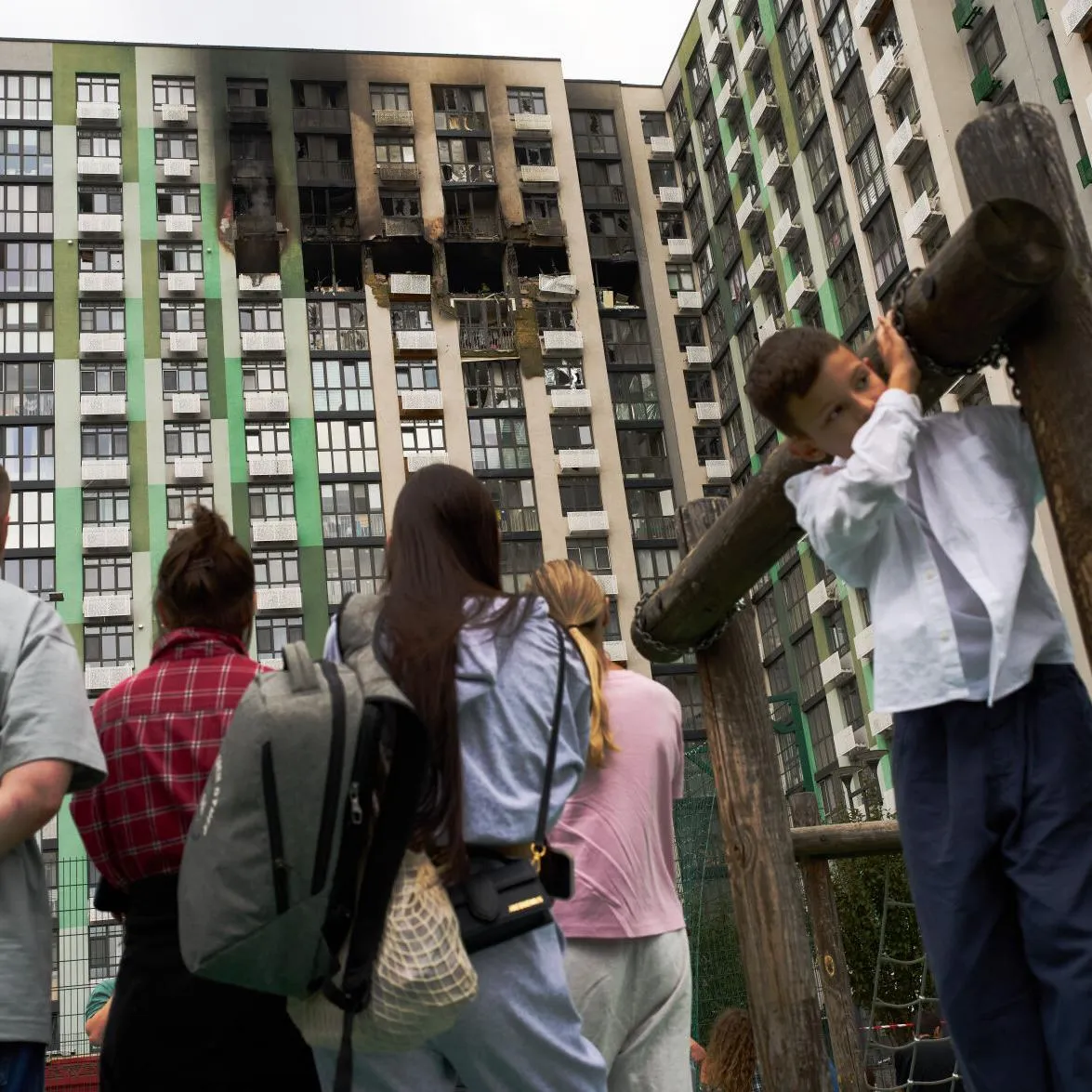
Ukraine’s capital endured another brutal night as Russia strikes Kyiv sixth day in a row, killing at least 12 people and wounding more than a dozen others, including three children. Officials described it as an unprecedented stretch of consecutive heavy attacks since the full scale invasion began more than four and a half years ago.
The overnight assault lasted more than 12 hours, with cruise and ballistic missiles, jet powered drones, glide bombs, and artillery salvos targeting Kyiv along with eight other regions. Ukrainian officials said the goal appeared to be wearing down civilians by disrupting daily life rather than striking purely military targets.
Ukraine’s air force reported that the attack began in the early evening and used ballistic, cruise, and anti radar missiles alongside more than 200 drones and decoys. About a third of the drones were jet powered, a newer type that flies faster and proves far harder for air defenses to intercept than older propeller driven models.
The timing carried added weight, since the attack came just as millions of Ukrainian schoolchildren returned to classrooms for the new academic year. Officials noted this marked the fifth school year that students have begun since Russia’s invasion began, a grim milestone for a generation that has never known a normal, uninterrupted school calendar.
Nearly 350 emergency workers were deployed across Kyiv and the surrounding region to respond to fires and search for survivors among damaged buildings. Rescue teams worked through the morning hours, pulling residents from apartment blocks and clearing debris from streets across several districts.
Russia’s Defense Ministry described the assault as a large scale strike using precision guided weapons and long range drones, claiming it targeted facilities that manufacture and store weapons along with other military related infrastructure. Ukrainian officials strongly dispute this characterization, pointing to residential buildings and civilian infrastructure among the sites hit.
This sixth consecutive night of bombardment follows a pattern that has intensified in recent months as Russia’s progress on the ground has slowed. Analysts note that as territorial gains stall, aerial attacks on cities have increased, a shift some officials describe as an attempt to pressure Ukraine’s government through civilian suffering rather than battlefield victories.
Air defense crews worked continuously through the night attempting to intercept incoming threats, though the sheer volume of drones and missiles launched in a single assault stretches even well equipped defense systems to their limits. Officials say newer jet powered drones have made interception increasingly difficult.
International reaction to the continued strikes has been one of growing alarm, with several allied governments renewing calls for additional air defense support for Ukraine. Diplomats have also pointed to the strikes as evidence that claims of openness to peace talks have not translated into any meaningful reduction in hostilities on the ground.
Kyiv’s mayor addressed residents following the attack, describing the scale of destruction and thanking emergency responders for their continued work under extremely difficult conditions. City officials say they remain focused on restoring services quickly while continuing to reinforce shelters and warning systems for residents.
As the war continues into its fifth year, this latest run of attacks underscores the toll continued fighting takes on ordinary civilians far from the front lines. With winter approaching and officials warning it may prove the most difficult yet, the coming months are expected to bring continued uncertainty for millions of Ukrainians enduring life under near constant threat of attack.
