

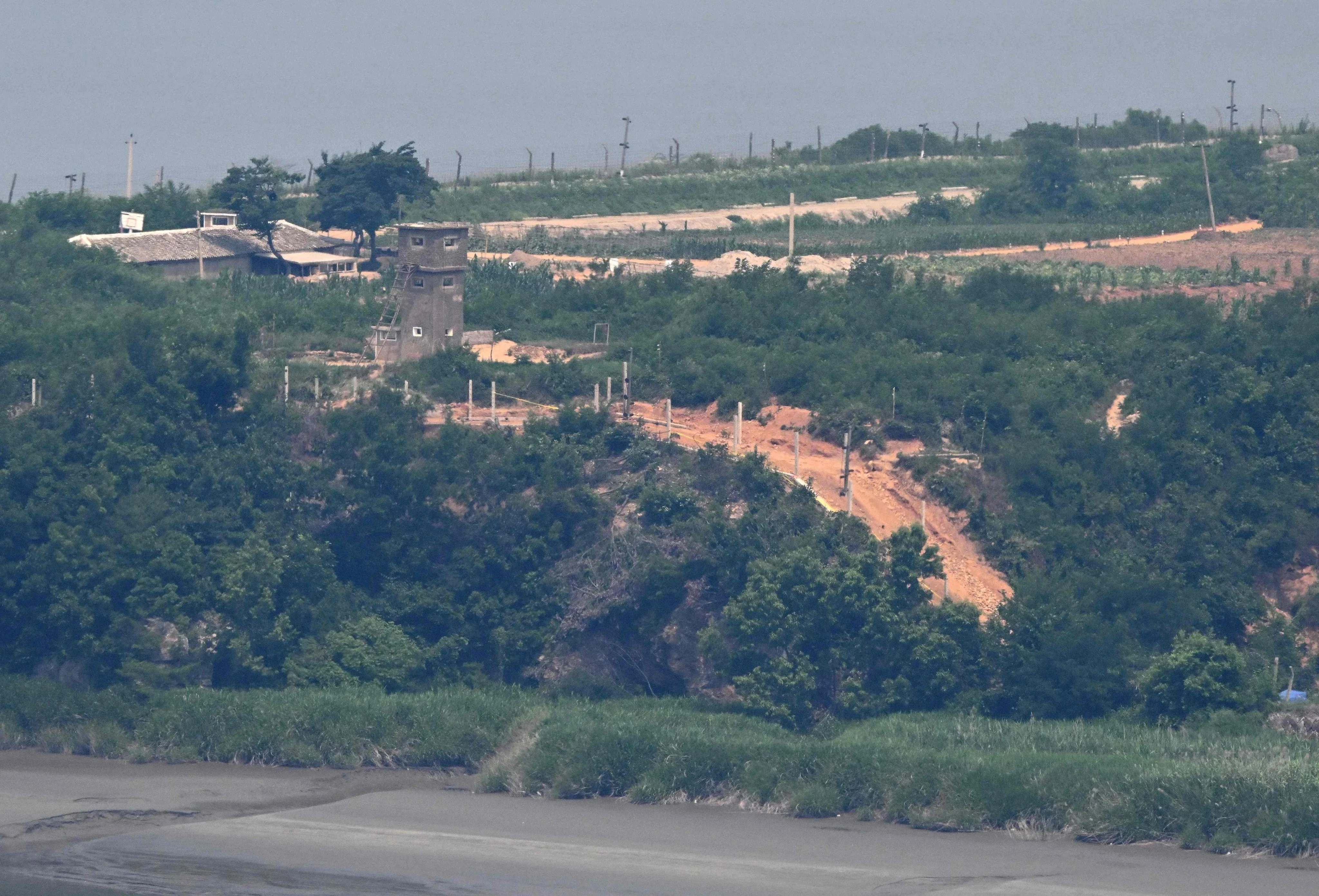
South Korea’s Joint Chiefs of Staff issued a pointed demand today calling on North Korea to immediately halt border fortification work and offer a formal apology following a landmine explosion inside the Demilitarized Zone that left South Korean soldiers injured. Military officials said the incident represents a clear and deliberate breach of the armistice framework that has governed the heavily fortified border since the end of the Korean War more than seventy years ago.
This demand followed a provocative statement issued under the name of Kim Yo-jong, the influential sister of North Korean leader Kim Jong-un, which claimed the explosion was actually a staged provocation orchestrated by South Korea itself. South Korean officials firmly rejected this characterization, with military leadership stating explicitly that North Korea bears full responsibility for the incident and for any consequences that may follow from its continued border activities.
A senior operations officer at South Korea’s Joint Chiefs of Staff told reporters that the discovery of the landmine constitutes a blatant violation of the Armistice Agreement and undermines the broader spirit of existing inter-Korean understandings. He stated that South Korea’s military would hold North Korea strictly accountable based on the physical evidence gathered during the joint on-site investigation conducted in the days following the blast.
The specific demand centers on North Korea’s ongoing work fortifying sections of its side of the border, activity that South Korean officials argue has directly heightened tensions along one of the most militarized frontiers in the world. Despite the forceful rhetoric, military officials notably stopped short of detailing any specific retaliatory measures South Korea might pursue, suggesting an effort to balance a firm public response with continued caution about further escalating the situation.
This latest flashpoint arrives at a particularly sensitive moment, with South Korean President Lee Jae-myung’s government simultaneously working to finalize a major investment agreement with the United States and generally seeking to project an image of stability on the Korean Peninsula. The timing has added political complexity for Seoul, which must balance a firm security response with its broader diplomatic and economic priorities currently playing out on the international stage.
Military analysts note that landmine-related incidents along the Demilitarized Zone, while unfortunately not unprecedented in the decades-long history of inter-Korean tension, carry heightened significance whenever they result in formal findings of armistice violations through the established international oversight mechanisms that have monitored the border since 1953. Such formal determinations typically trigger diplomatic notifications and can shape how both sides approach subsequent border security measures.
As this dispute continues developing, both South Korean and international observers are watching closely for any further response from Pyongyang, along with potential follow-up measures South Korea may introduce regarding its own border security posture. The incident underscores how quickly tensions can resurface along a border that, despite more than seven decades of relative stability, remains one of the most volatile flashpoints in global geopolitics.
