

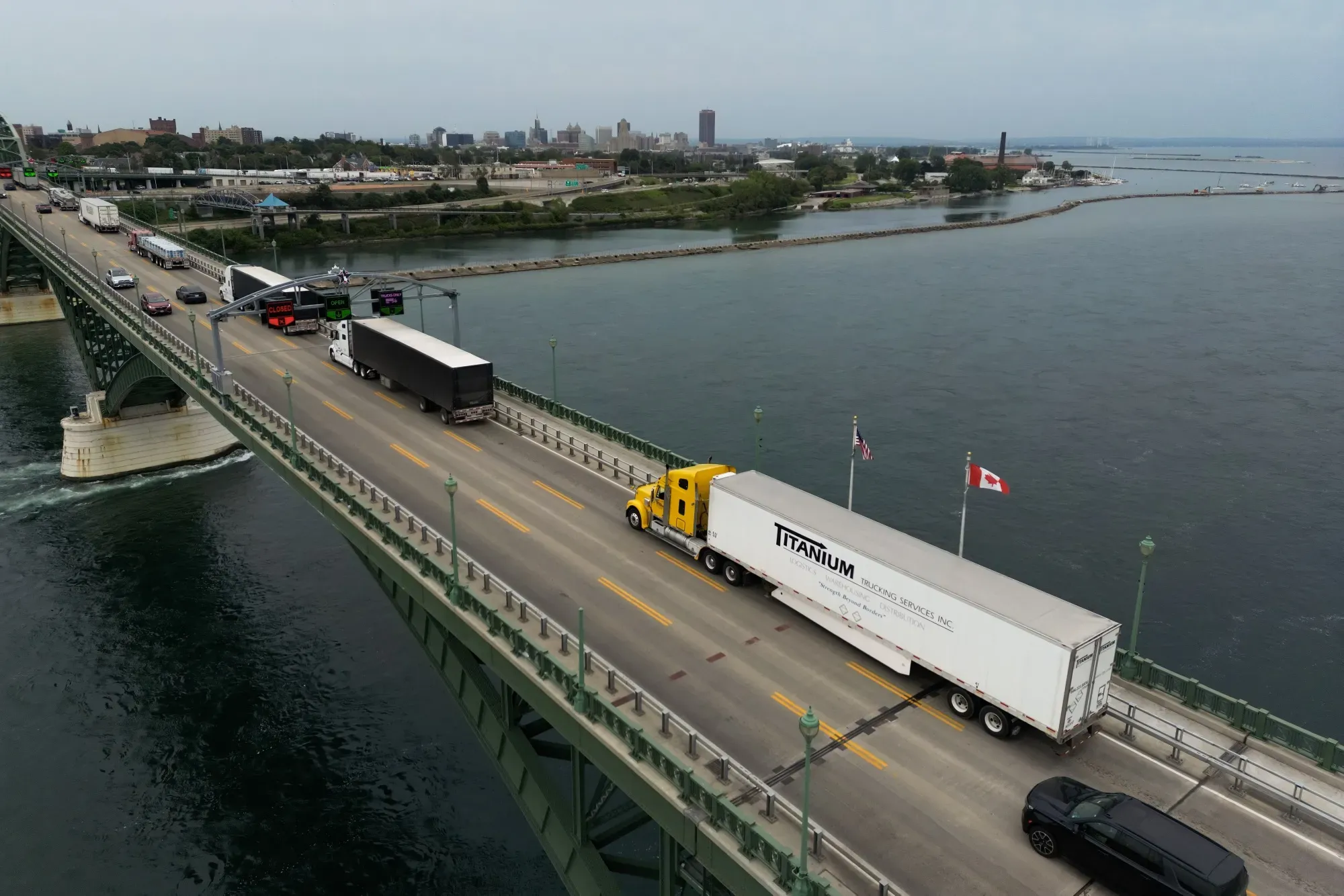
US President Donald Trump has announced a new 50% tariff on Canadian cars, trucks, auto parts and steel.
The new tariff is set to start on January 1, 2027. It marks another sharp step in the trade dispute between the United States and Canada.
Trump said the new duties would cover key Canadian goods sold in the US. He also accused Canada of treating US farmers unfairly.
In a social media post, Trump said Canada had taken advantage of the US for many years. He also said the US did not need Canada as much as Canada needed the US.
The announcement has added fresh pressure to trade ties between the two countries. The US and Canada have long been close trade partners. Their economies are also linked through major supply chains.
Canadian Prime Minister Mark Carney said the latest move was not a surprise. He said Canada had expected some form of response after it rejected a recent US trade proposal.
Speaking to reporters in Quebec, Carney said Canada had already faced US tariffs that he called unjustified. He said the new move could also hurt US workers.
Carney pointed to workers in states such as Michigan, Ohio, Kentucky and Alabama. Many of those workers depend on demand from Canada.
He said Canada is a major buyer of US vehicles. He also noted that Canada buys more US automobiles than the European Union, Japan, South Korea and several other markets combined.
Carney said Canada is ready to return to talks. However, he said the US must first approach the talks with the right attitude and show a real partnership with Canadian industries.
The latest tariff plan follows the collapse of trade talks between Washington and Ottawa. The two sides had been working on a possible deal to reduce tariffs on cars and other goods.
Those talks broke down over the weekend.
Trump had already imposed another 50% tariff on about $20bn of Canadian exports. The goods included hockey equipment and electronics.
Carney rejected the latest US proposal on Saturday. He said the US had asked for too much while offering too little.
The Canadian government has also promised to respond to US tariffs. Carney has said Canada will match American tariffs dollar for dollar.
The new US tariff could affect the large auto industry on both sides of the border. Cars and parts often cross the US Canada border several times during production.
Higher tariffs can raise the cost of imported goods. They can also increase costs for companies that depend on parts from another country.
The steel tariff could create similar pressure. Steel is used across many industries, including car making, construction and manufacturing.
The new duties could therefore affect more than the companies that directly import Canadian products.
The US and Canada have traded for decades. Their total trade in goods and services is worth hundreds of billions of dollars each year.
US trade data puts the value of two way trade at about $909bn. Canada is one of the most important trade partners for the US.
The new tariff plan could put that long trade relationship under greater strain.
Trump has made tariffs a key part of his economic policy. His administration has used tariffs to push trading partners toward new deals and to protect US industries.
Canada has taken a firm position against the latest US measures. Its government says it wants a fair trade relationship but will defend Canadian workers and companies.
The dispute now leaves both sides facing a difficult choice. The US wants stronger trade terms, while Canada wants to protect its key industries from higher costs.
The planned January 2027 tariffs give both countries more time to seek a deal. However, the latest exchange shows that major differences remain.
Further talks could decide whether the new tariffs take effect as planned or whether Washington and Ottawa reach a new trade agreement first.
