

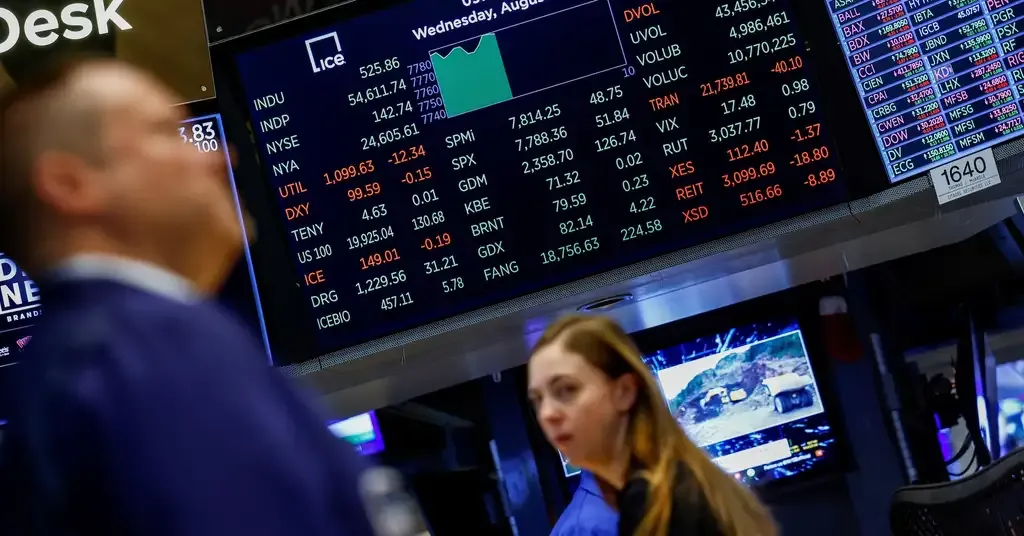
Wall Street headed into Friday’s trading session closely focused on the morning’s scheduled release of the September employment report, a closely watched economic indicator that arrived as Treasury yields hovered near their highest levels in roughly twenty-four years. Technology stocks had shown notable resilience through the preceding sessions, helping offset broader market pressure tied to these elevated borrowing costs even as investors awaited fresh labor market data that could meaningfully influence expectations for future Federal Reserve policy decisions.
Economists surveyed ahead of the report generally expected the unemployment rate to hold steady around 4.1 percent, with wage growth anticipated to come in around three-tenths of a percent on a month-over-month basis. Any wage growth figure that significantly exceeded these expectations carried the potential to reignite inflation concerns that had only recently cooled somewhat following a lighter-than-expected inflation reading for August released earlier in the week.
Fresh data released ahead of the jobs report showed a notable decline in announced layoffs during September, with job cut announcements falling to approximately forty-three thousand, representing a twenty percent decrease compared to the same period the previous year. This data point, combined with continued declines in initial unemployment claims over recent weeks, painted a picture of a labor market that has remained broadly stable even amid various other sources of economic uncertainty throughout the year.
Interest rate expectations heading into the jobs report had shifted considerably over the preceding week, with the probability of an October rate cut having fallen substantially following the combination of the lighter inflation reading, generally dovish commentary from various Federal Reserve officials, and other softer economic data points. This shifting rate outlook meant that Friday’s employment figures carried outsized importance for determining whether markets would continue anticipating near-term monetary easing or instead brace for a longer period of elevated interest rates.
Technology sector strength continued representing one of the more consistent themes supporting broader market performance throughout the week, with chip-related stocks in particular showing sustained investor enthusiasm tied to continued strong demand for artificial intelligence computing infrastructure. This sector resilience has provided an important counterbalance to the pressure elevated Treasury yields have placed on more broadly diversified market indexes throughout recent weeks of trading.
Market analysts noted that Friday’s employment report represented one of the more significant scheduled economic releases of the current trading period, given its direct relevance to the ongoing debate about Federal Reserve policy direction heading into the final months of the year. The combination of this employment data alongside the previous day’s inflation reading provided investors with a particularly comprehensive, if occasionally contradictory, picture of underlying economic conditions.
As markets processed Friday’s employment figures alongside the broader context of elevated yields and continued technology sector strength, the overall trading environment reflected the genuinely complex balancing act investors have navigated throughout much of the year. Whether this particular employment report ultimately reinforces or challenges the recently reduced expectations for near-term rate cuts will likely play a meaningful role in shaping market direction through the remaining months of the calendar year.
