

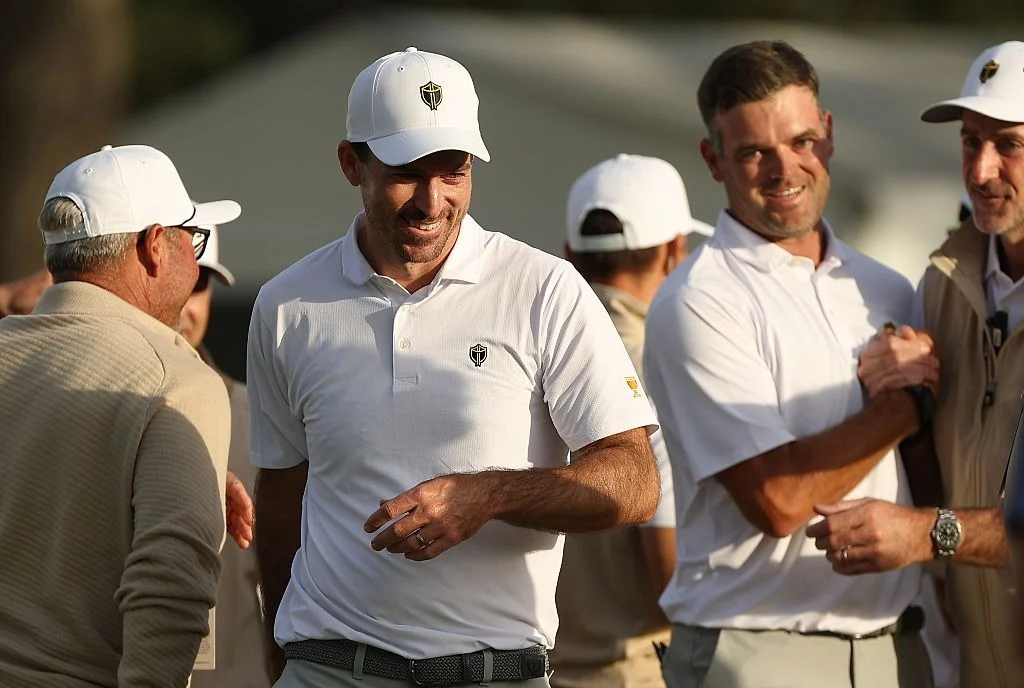
The Presidents Cup reaches its decisive conclusion today, with the International team needing just five points from twelve available singles matches to claim only the second title in the competition’s history and its first since 1998. The International squad enters today’s finale holding a significant ten and a half to seven and a half point advantage following two dramatic days of team competition that saw them repeatedly frustrate a heavily favored American side throughout Friday and Saturday’s sessions at Medinah Country Club.
This marks the first time in the tournament’s history that the International team has carried a lead into the decisive singles session while competing on American soil, a genuinely historic circumstance given the United States’ overwhelming thirteen wins, one loss, and one tie record across the previous fifteen editions of this biennial competition. American captain Brandt Snedeker has publicly acknowledged the difficulty of his team’s position, telling reporters he feels he has let his players down, drawing sympathetic responses from golf veterans and commentators covering the tournament who recognize the unusual pressure facing the American captain heading into this final day.
Snedeker’s singles lineup strategy reflects the need to generate early momentum, front-loading his roster with several of his strongest performers in hopes of building quick points that could shift the psychological momentum of the day before the International team can fully close out the tournament. This kind of front-loaded lineup strategy represents a familiar approach for teams facing a significant deficit heading into decisive singles play, prioritizing early scoreboard pressure over more evenly distributed matchup considerations throughout the full twelve-match order.
Individual storylines add further intrigue to today’s proceedings, including American veteran Xander Schauffele entering the day undefeated in three previous Presidents Cup singles appearances, while world number one Scottie Scheffler will look to bounce back after being notably benched during Saturday’s foursomes session, a format in which he has historically struggled across combined Presidents Cup and Ryder Cup competition. These individual narratives layer additional drama onto a day already defined by the broader team competition’s unprecedented stakes for the visiting International squad.
Historical precedent offers some context for what typically unfolds during Presidents Cup singles sessions, with the American team having previously won the singles competition in eight of the previous thirteen editions, compared to three International victories and four ties, resulting in an aggregate scoring advantage of ninety-seven and a half points to eighty-two and a half points favoring the United States across singles play throughout the tournament’s history. This historical pattern suggests that even facing today’s significant deficit, a genuine American comeback remains mathematically and historically plausible, even if it would represent an unprecedented achievement given the specific circumstances of coming from behind on home soil.
Television coverage for today’s decisive matches spans several hours on major sports networks, reflecting the considerable interest this potentially historic outcome has generated among golf fans and broader sports audiences. The unusual drama of a potential upset, combined with genuine uncertainty about the outcome heading into play, has elevated interest in what might otherwise have been viewed as a fairly predictable conclusion to another one-sided American victory in this particular competition.
As today’s matches unfold across the demanding Medinah layout, golf fans around the world are watching closely to see whether the International team can complete what would represent one of the most significant results in the tournament’s history. Whether Team USA can engineer an unprecedented comeback or the Internationals close out their historic victory, today’s competition promises to provide a memorable conclusion to what has already proven one of the more competitive and dramatic editions of this biennial event in recent memory.
