

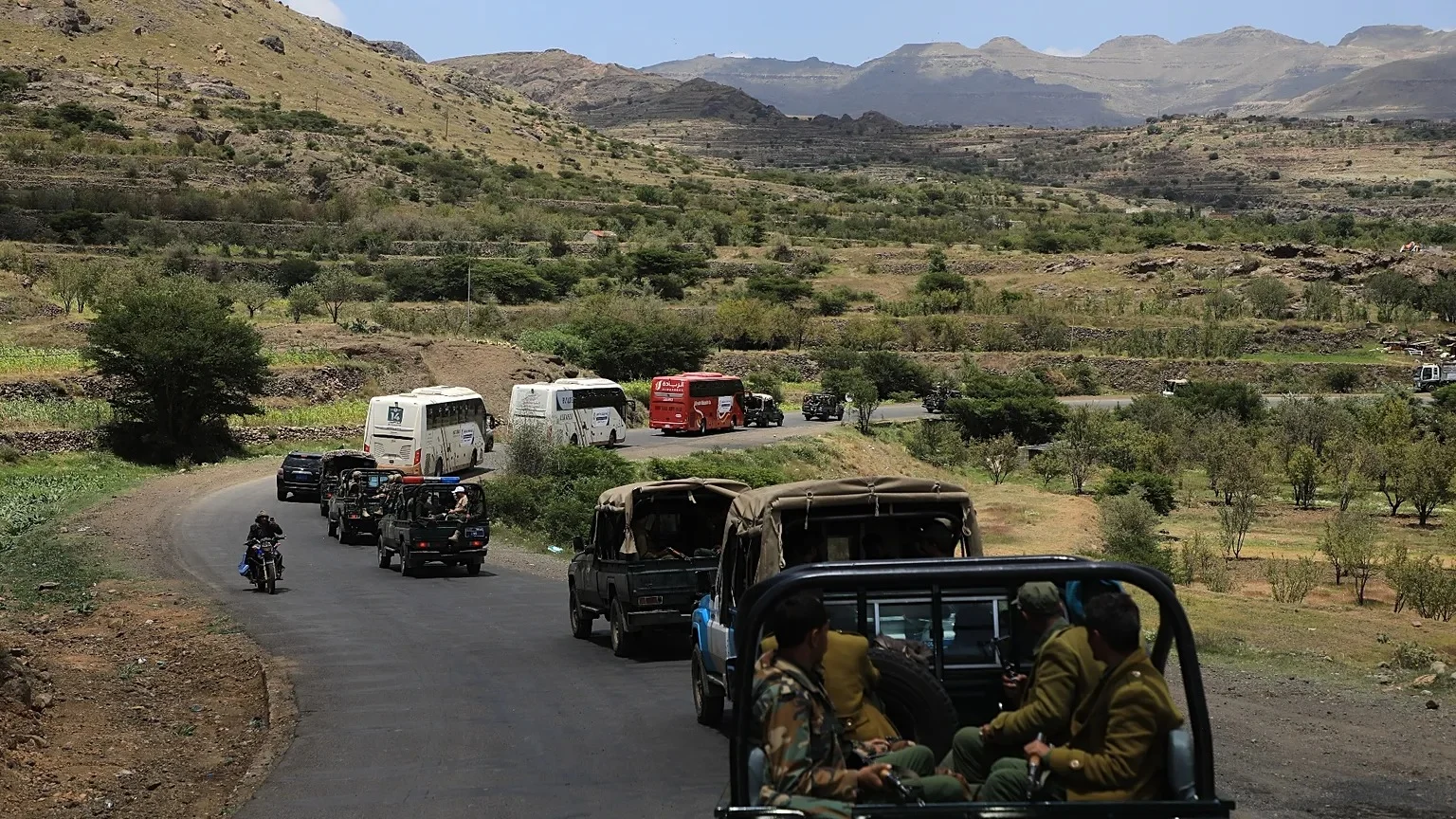
Yemen’s civil conflict has reached another significant turning point as Houthi forces capture Hanish archipelago territory, following the withdrawal of hundreds of government allied fighters who had previously held the strategically positioned islands in the southern Red Sea.
This latest gain adds to a rapid sequence of Houthi territorial advances in recent weeks, following the group’s earlier seizure of Perim Island and the port city of Dhubab, together giving the Iran backed movement effective control over the vital Bab el-Mandeb Strait shipping route.
Military analysts note that the withdrawal of government allied forces without sustained resistance suggests significant challenges facing the internationally recognized government’s military coalition, potentially reflecting supply issues, morale problems, or broader strategic difficulties in the southern theater.
The Hanish archipelago’s position within the southern Red Sea gives its controlling force meaningful influence over shipping lanes connecting the Gulf of Aden to the broader Red Sea corridor, adding further strategic weight to the Houthi movement’s expanding territorial reach.
This territorial expansion compounds existing pressure on global shipping companies, who already faced difficult routing decisions given ongoing disruption at the separate Strait of Hormuz, now finding a second critical Middle East chokepoint increasingly under contested control.
International shipping organizations have expressed growing alarm about the security situation across the wider Red Sea and Gulf of Aden corridor, with vessels facing compounding risks from multiple armed actors controlling different sections of these historically vital global trade routes.
Yemen’s internationally recognized government has faced sustained military pressure throughout this renewed phase of conflict, with the rapid pace of recent Houthi advances raising serious questions about the government coalition’s capacity to defend remaining territory in the country’s south.
Regional powers backing the internationally recognized government now face difficult decisions about whether and how to reinforce beleaguered positions, given the apparent momentum currently favoring Houthi forces across multiple fronts in this renewed phase of the long running civil war.
Humanitarian organizations continue expressing concern about civilian populations caught amid this shifting territorial control, with displaced communities facing uncertainty about safety and access to basic services as control over various regions continues changing hands.
International diplomatic efforts addressing the broader Yemen conflict face additional complexity given these rapid territorial shifts, with any negotiated settlement now needing to account for a substantially altered map of control compared to just weeks earlier in the conflict.
As Houthi forces consolidate this latest territorial gain, attention remains focused on whether government allied forces can mount an effective response or whether the group’s momentum will continue extending further along Yemen’s strategically vital coastline in the coming weeks.
