

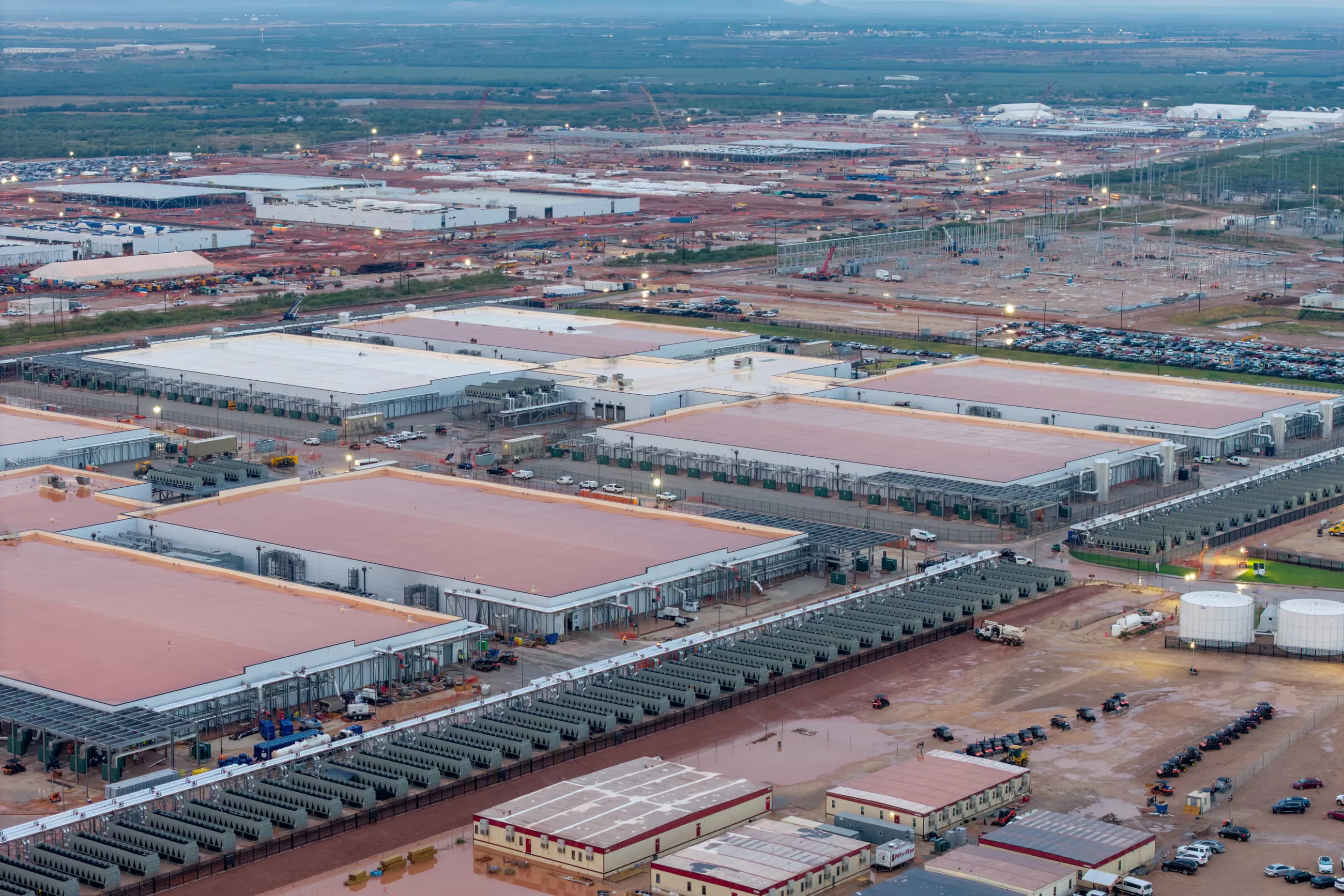
Big tech firms are spending huge sums on AI data centers. Some of the debt used to fund these projects does not appear on their main balance sheets. This has led to warnings about a possible debt crisis.
But the risk may not be as large as some fear.
Companies such as Meta, Oracle, xAI and CoreWeave are using special firms to build some data centers. These firms can raise money from banks, investors and other groups. The tech company then gets full use of the finished site.
The key point is that much of the debt sits with the separate firm. It may not appear as a direct debt on the tech company’s balance sheet.
This type of deal is known as off balance sheet financing. It is not new. Companies have used similar deals for many years.
The scale is what worries some experts today. More than $120 billion in AI data center spending had been moved off company balance sheets by late 2025, according to the Financial Times. Goldman Sachs has also estimated that AI and data center spending could reach $5.3 trillion by 2030.
That is a huge amount of money. It is fair to ask if the debt could become a problem.
Some critics have compared the deals with Enron. The energy firm collapsed in 2001 after using complex financial structures. The failure caused major losses and hurt trust in financial markets.
However, the current data center boom is not the same as the Enron case.
Modern companies face strict financial rules. They also face close review from investors, regulators and analysts. Firms must provide more details about many of their financing deals than they did decades ago.
There is also a key difference in the assets.
In the 1980s and 1990s, biotech firms used similar funding deals to develop new drugs. The firms could spend millions on a drug that later failed in trials.
Centocor was one company that used limited partnerships to raise funds for drug development. Investors helped fund research, while the company kept the right to use successful products.
Many drug projects failed. Yet those failures did not cause a wider market panic.
Data centers carry a different type of risk.
A drug can fail and have little value. A data center is a real building with power systems, land, networks and computer equipment. Even if demand falls, the site does not simply vanish.
This does not mean every data center will make money. Some projects may earn less than expected. Some lenders may lose money. Some buildings may also fall in value.
Still, the demand for computing power remains strong.
North American data center capacity rose by 36 percent in 2025, while vacancy fell to a record 1.4 percent, according to CBRE data cited in the source material. Demand was stronger than supply in many major markets.
The AI market is also still young. Microsoft has estimated that only 17.8 percent of the world’s working age population uses generative AI.
That leaves room for further growth.
The biggest risk may not be the financing method itself. The real risk is whether companies build too much capacity or pay too much for it.
If demand slows, investors may face losses. But the risk is spread across many lenders, funds and other investors. The assets also have real value.
That makes today’s AI data center debt different from the type of hidden risk seen in past corporate failures.
Investors should still read company filings and check the debt terms. They should also look at who owns each project and who carries the risk.
But the rise of off balance sheet financing does not, by itself, point to a new financial crash.
The AI data center boom may create winners and losers. It may also lead to some bad investments. Yet the assets are real, demand remains strong and the financing risks are shared.
For now, the data suggests a major investment cycle rather than a debt bomb waiting to explode.
