

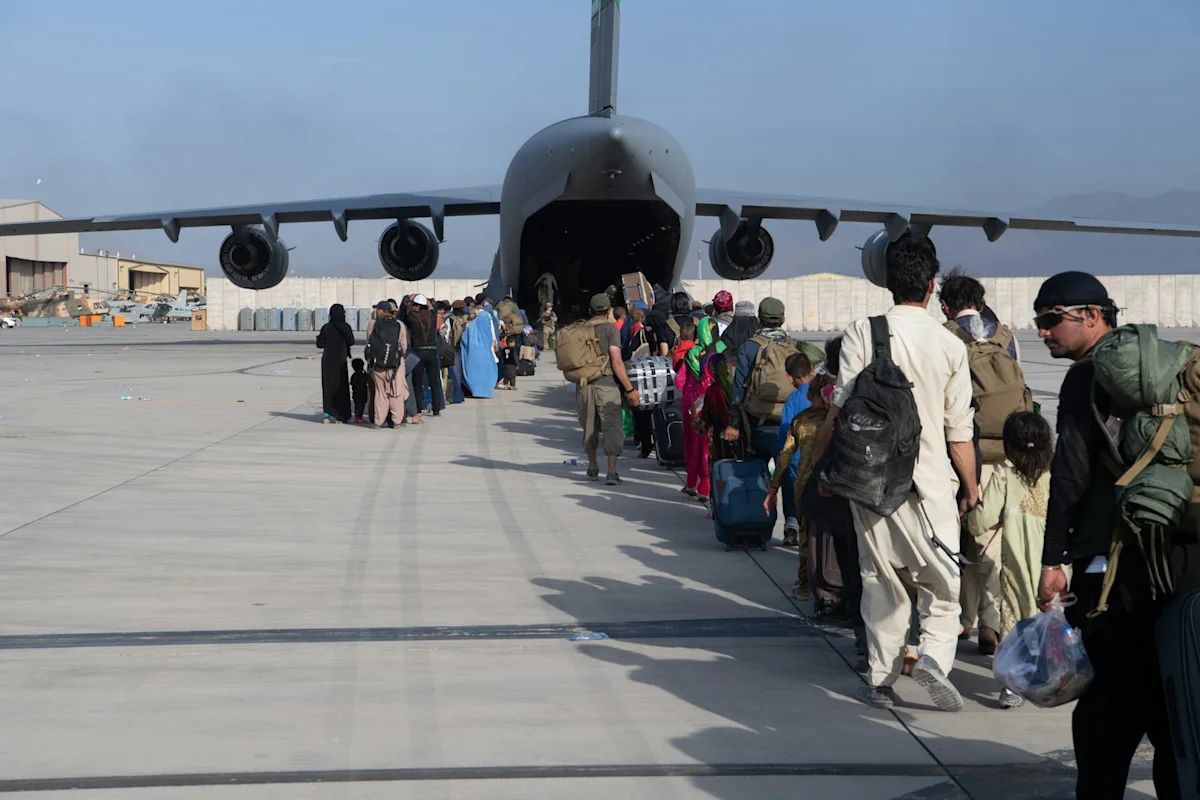
Five years after the US left Afghanistan, many Afghan allies still face long waits, family separation and fear over their future in America.
The crisis has grown under President Donald Trump. His administration has paused refugee resettlement and many immigration and visa processes for Afghans. Afghanistan is also under a US travel ban that has made family reunions much harder.
For Sayed Sadat, the policy changes have had a deeply personal cost. Sadat worked as a lawyer with the US government in Afghanistan. In 2021, he began an asylum case while studying for a master’s degree in Germany.
He reached the United States in 2024. His wife was included in his case and had expected to follow him. She had been told by the International Organization for Migration that she could receive a visa and travel through the United Arab Emirates.
That plan changed after Trump returned to office in January 2025. The US then paused refugee resettlement. Sadat’s wife was left in Afghanistan, and the couple has now spent five years apart.
Sadat said his wife often asks when the travel ban will end and when family reunification will resume. He said he has no clear answer. He also has not been able to secure his green card because of the pause in visa processing.
His case reflects a wider problem. Nearly 200,000 Afghans came to the United States after the US withdrawal. Some entered through humanitarian parole. Others came through Special Immigrant Visas, known as SIVs, which were created for people who worked with US forces.
Many of those Afghans now face long delays. Some also fear losing legal status or being detained.
In July, a federal judge ordered the administration to allow some family members of asylum seekers to enter the United States. The administration appealed the ruling and asked the court to pause the order.
The SIV system also faces a large backlog. Shawn VanDiver, head of AfghanEvac, said nearly 180,000 people have been approved for visas but are still waiting for interviews.
He said many applicants have already completed most of the required steps. They may only need an interview, medical check and visa before travel.
The administration also ended Temporary Protected Status for Afghans. About 11,000 Afghans in the United States were affected. Many can no longer work under that status and face possible detention or removal.
Some Afghans who already hold green cards have also faced new checks. US officials have sent notices to some SIV holders saying that approval letters used in their immigration cases have been revoked.
Refugees are also facing new interviews and checks. Refugee groups say these steps create fear even when they find no clear issue with a person’s legal case.
The financial pressure has also increased. Under a law passed by Congress last year, refugees and asylees lost access to the Supplemental Nutrition Assistance Program, known as SNAP. They are also set to lose Medicaid access in October.
Refugee groups say these changes have increased demand for food and other basic help. Some groups have opened food banks and are delivering food to families who are afraid to leave their homes.
Immigration enforcement has added another layer of fear. Some Afghans have been detained during routine check-ins with immigration officials. Lawyers and aid groups say people can feel trapped because following required rules may still expose them to detention.
The case of Mohammad Nazeer Paktiawal has added to those concerns. Paktiawal, an Afghan man who had fought alongside US forces, was taken into immigration custody earlier this summer. He died the next day after an allergic reaction, according to reporting cited by advocates.
Afghan advocates and US veterans who worked with Afghan allies have urged Congress to act. Lawmakers have introduced bills that could offer SIV holders a path to permanent residency and restore temporary protection for Afghans.
One bipartisan effort, the Fulfilling Promises to Afghan Allies Act, would create a path to permanent legal status for some SIV holders. Other lawmakers have backed legislation to restore Temporary Protected Status for Afghanistan.
For now, many Afghan families remain divided. Sadat said he still hopes to receive his green card and reunite with his wife.
He also said he still sees himself as part of the American community. Despite the long wait, he plans to keep fighting for a future with his family in the United States.
