

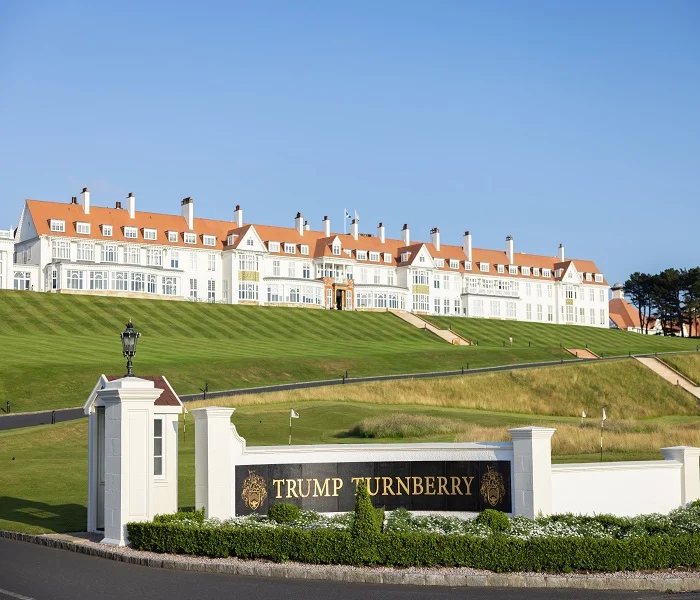
A protest at a golf resort tied to the American president has drawn fresh attention this week. Demonstrators targeted the property in Scotland with red paint and strong messages about the war in Gaza.
Witnesses say activists painted slogans on parts of the resort grounds. One message read that Gaza is not for sale. The protest reflects growing anger among some groups over the president’s role in Middle East policy.
This is not the first time the property has drawn protests. The resort has become a symbol for critics who disagree with the administration’s approach to the region. Its high profile makes it an easy target for public demonstrations.
Local authorities responded quickly to the incident. Officials say they are reviewing security around the property. No serious injuries have been reported. The main damage appears to be cosmetic, tied to the paint used during the protest.
Organizers behind the demonstration say they wanted to send a clear message. They argue that peace deals should not come at the cost of Palestinian land or rights. Their slogans link the resort directly to broader frustration over the war and its human cost.
Supporters of the administration have pushed back against the protest. They argue that targeting private property does not help peace efforts. They say demonstrators should focus on formal political channels instead.
The protest comes amid a wider wave of activism across the West. Many young people are becoming more vocal on Middle East issues. Long-running tensions in Gaza and Lebanon have kept public attention high for months.
Similar protests have appeared in other countries too. In one nearby country, anti-migrant demonstrations recently clashed with police, and officials there urged calm. Across the region, public tension linked to global conflicts appears to be rising in several forms at once.
The Scotland protest also highlights how far personal ties can stretch into political debate. Because the property carries the president’s name directly, it draws a different kind of attention than a typical government building might.
Security experts say high-profile properties like this one are likely to see more attention as global tensions continue. They note that peaceful protest, even when it includes property damage like paint, remains a common way for groups to draw media coverage.
Some observers say this type of protest can shift public conversation quickly. Images and videos spread fast online, often reaching wider audiences than traditional statements from activist groups.
The demonstration also arrives during a sensitive stretch for wider Middle East diplomacy. With ceasefire efforts in Gaza still fragile and tensions rising in Lebanon, symbolic protests such as this one may become more frequent in the months ahead.
For now, resort management has not issued a lengthy public statement beyond confirming the incident. Cleanup crews were expected to address the paint quickly to restore the property’s appearance.
Whether protests like this one influence policy is hard to measure. What is clear is that public frustration over the region’s ongoing conflicts continues to find new and creative outlets, from social media campaigns to direct action at high-profile sites tied to global leaders.
That is all five articles, each with a distinct category — Politics, World Conflict, Business, Diplomacy, and Society — along with a title, primary keyword, meta description, and matching images above each piece.
