

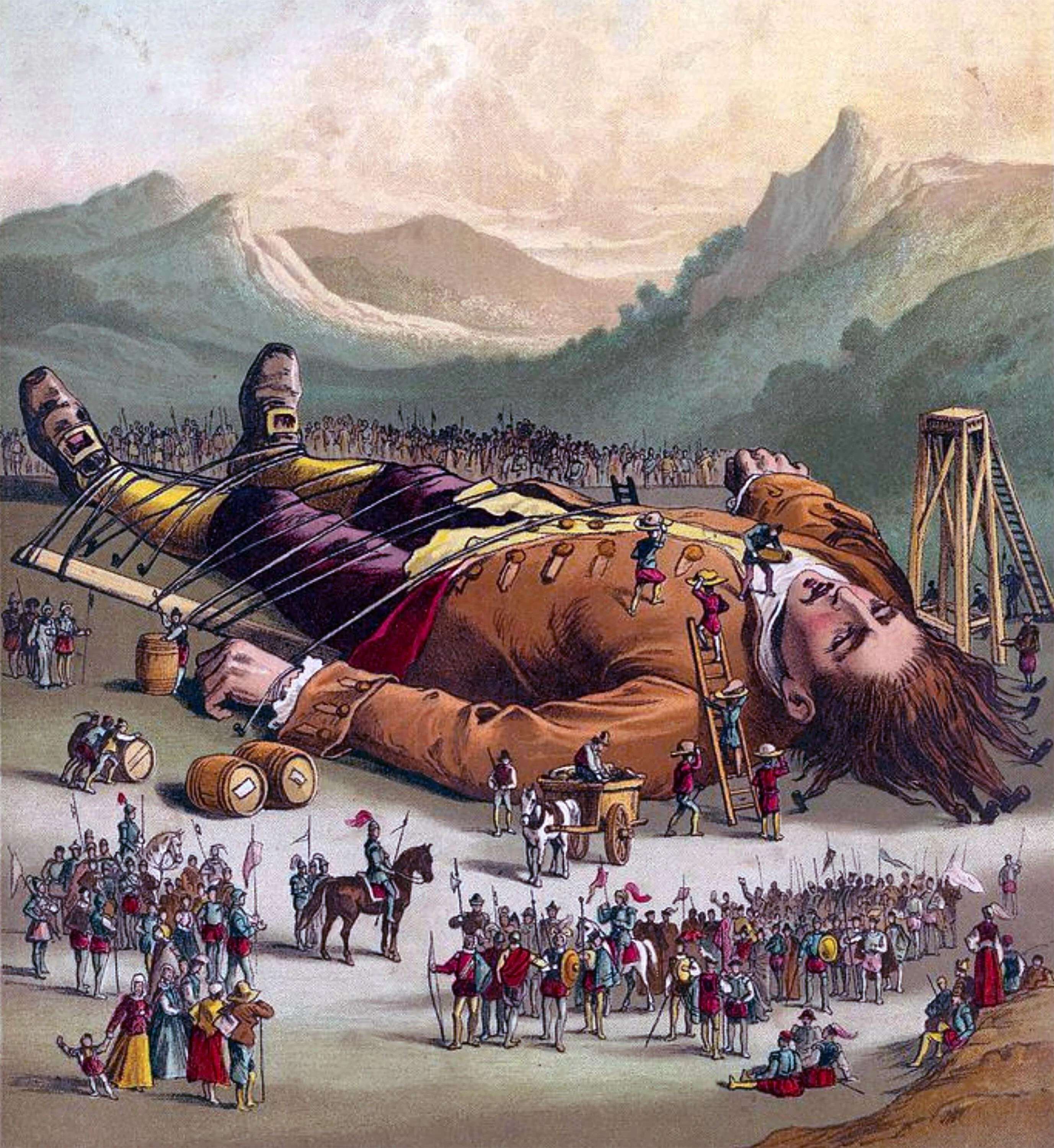
Readers and cultural groups in Ireland are marking three centuries since the publication of Jonathan Swift’s famous book, Gulliver’s Travels. The anniversary is bringing renewed attention to a work that has remained part of literary culture since it first appeared in 1726. Though often introduced to children as an adventure about strange lands and unusual creatures, the book was also written as a sharp examination of politics, power and human behaviour. Events marking its history are giving readers a chance to look beyond its best-known scenes.
Swift’s story follows Lemuel Gulliver as he travels to places whose people and customs challenge his understanding of the world. His encounters include tiny people, giants and societies with unfamiliar rules. These imagined settings make the story entertaining, but they also allow Swift to question the values of his own time. By making familiar institutions look strange, he encouraged readers to consider how much of what they accept as normal is shaped by habit, status and political interest.
The book’s humour is central to its lasting appeal. Swift uses exaggeration, absurd rules and unexpected reversals to expose the weaknesses of powerful people. Leaders may appear foolish, experts may defend pointless arguments and societies may treat trivial disagreements as matters of great importance. Such scenes can still feel relevant because public life continues to produce disputes over status, authority and the proper use of power.
Gulliver’s Travels has also changed in how it is read and presented. Adaptations for children often focus on the journeys and fantastic creatures, while adult readers may pay more attention to the book’s darker political themes. Films, stage productions, illustrations and classroom editions have each shaped the way different generations encounter the story. This flexibility has helped the work remain familiar even among people who have never read the original text in full.
The anniversary events in Ireland also underline Swift’s connection to Dublin. His life and writing were shaped by the political and religious divisions of the eighteenth century. He wrote as a clergyman and public figure who took a strong interest in the conditions of society. Understanding that background can help modern readers recognise why his satire was often so direct and why he used imaginary worlds to criticise real institutions.
Celebrations of classic literature can sometimes risk turning a challenging book into a simple heritage symbol. Swift’s work resists that easy treatment because it asks uncomfortable questions about human pride and the use of reason. Readers may disagree about which parts of the book matter most, but that debate is part of its continuing life. A literary anniversary can become an opportunity not only to remember a writer but also to reconsider the ideas that made the writing endure.
Three hundred years after publication, Gulliver’s Travels remains both a work of imagination and a tool for social criticism. Its invented worlds invite readers to laugh, but the laughter often leads to more serious questions. The anniversary shows how a book can travel through generations while continuing to speak to new audiences. Swift’s satire survives because it challenges readers to examine the gap between what people claim to value and how they actually behave.
