

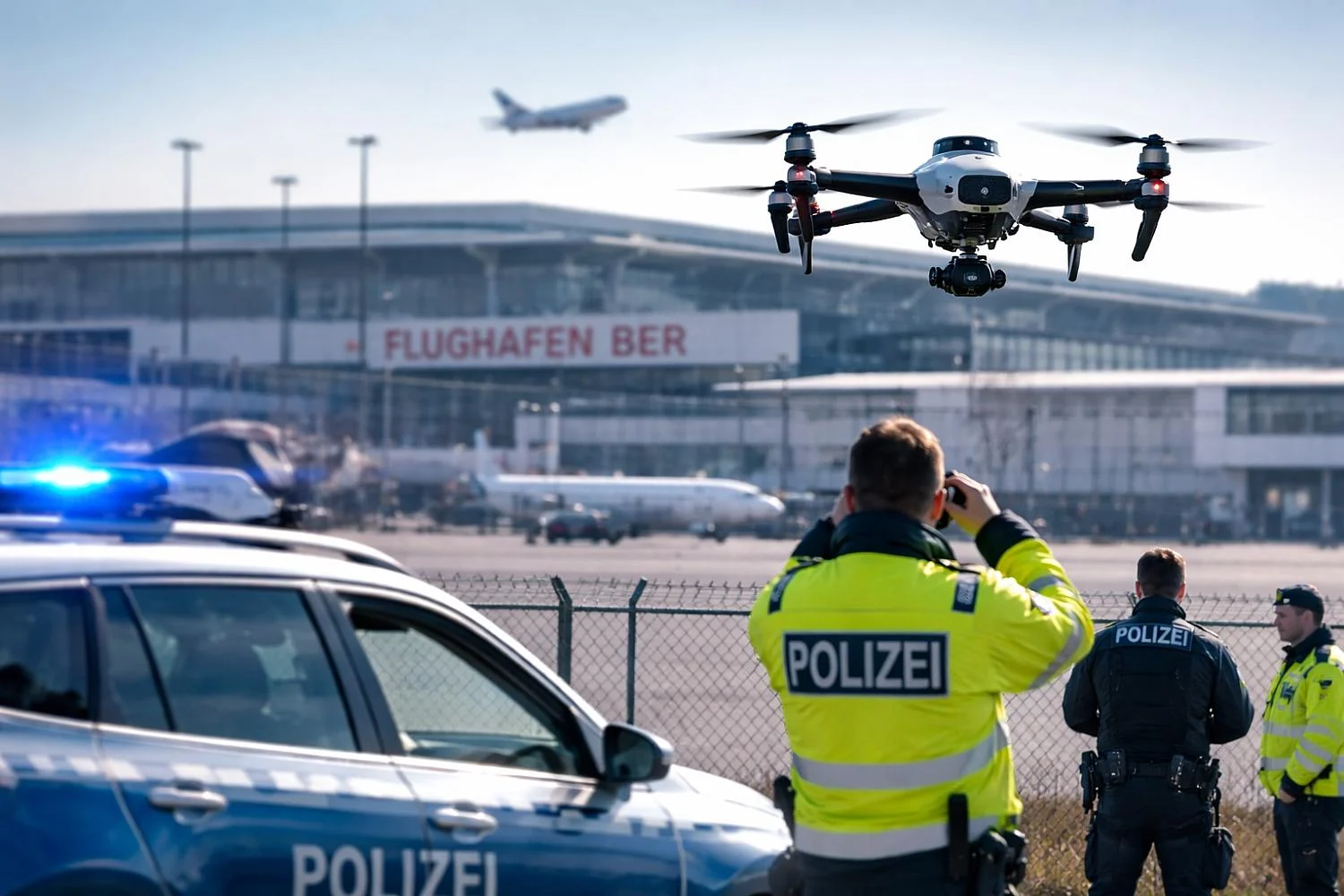
German investigators have found another drone and suspected military explosives near Leipzig/Halle Airport. The discovery has raised fresh concern about security at one of Germany’s key cargo hubs. The case is linked to an earlier suspected drone attack near the airport. German officials say they are working to find who was behind the incidents.
The airport is important for both trade and military logistics. It handles large cargo flights and supports transport linked to Ukraine. That role makes it a possible target for groups seeking to disrupt European supply lines. The discovery of more drones has therefore caused concern beyond the airport itself.
Investigators found the latest drone in a field near the airport. They also found about 50 grams of a substance believed to be a military explosive. Officials are examining the device and other material found nearby. They have not yet publicly confirmed who placed it there. The investigation remains active.
The case began with an earlier drone incident. A drone carrying explosives was found near a Ukrainian Antonov cargo aircraft. Another drone may have been involved in a separate incident with a DHL aircraft. The events raised fears that the airport could face a planned attack rather than a simple case of illegal drone use.
German Chancellor Friedrich Merz has said those behind attacks on Germany will face consequences. German officials have also warned about growing hybrid threats. These threats can include cyber attacks, sabotage, drones and other forms of pressure. They can be hard to trace because they may avoid direct military action.
Some German security sources suspect a link to Russia. Moscow has denied involvement. German authorities have not made a final public accusation. That point is important because an official finding would carry major political weight. It could also affect Germany’s policy toward Russia and its support for Ukraine.
Drones are now a growing security issue across Europe. Small drones can be cheap and easy to obtain. They can also carry cameras or other equipment. In a security role, they can watch sensitive sites or disrupt flights. A drone can force an airport to close air space even when no attack takes place.
The risk is wider than airports. European states are protecting military bases, power plants, ports and other key sites. The war in Ukraine has pushed many countries to rethink their drone defenses. Germany has also faced concern over how quickly it can build systems to detect and stop hostile drones.
The Leipzig case shows why technology is now part of modern security. A small aircraft can create a major threat when used near a busy airport. It can also cause fear and costly delays. The response will require better sensors, clear rules and fast action by police and airport staff.
The Major Tech Risk from hostile drones is therefore becoming a wider European issue. Germany must now find out who was behind the Leipzig incidents. It must also make sure its airports can detect similar threats early. The case shows how the tools of modern technology can be used for both trade and attack.
