

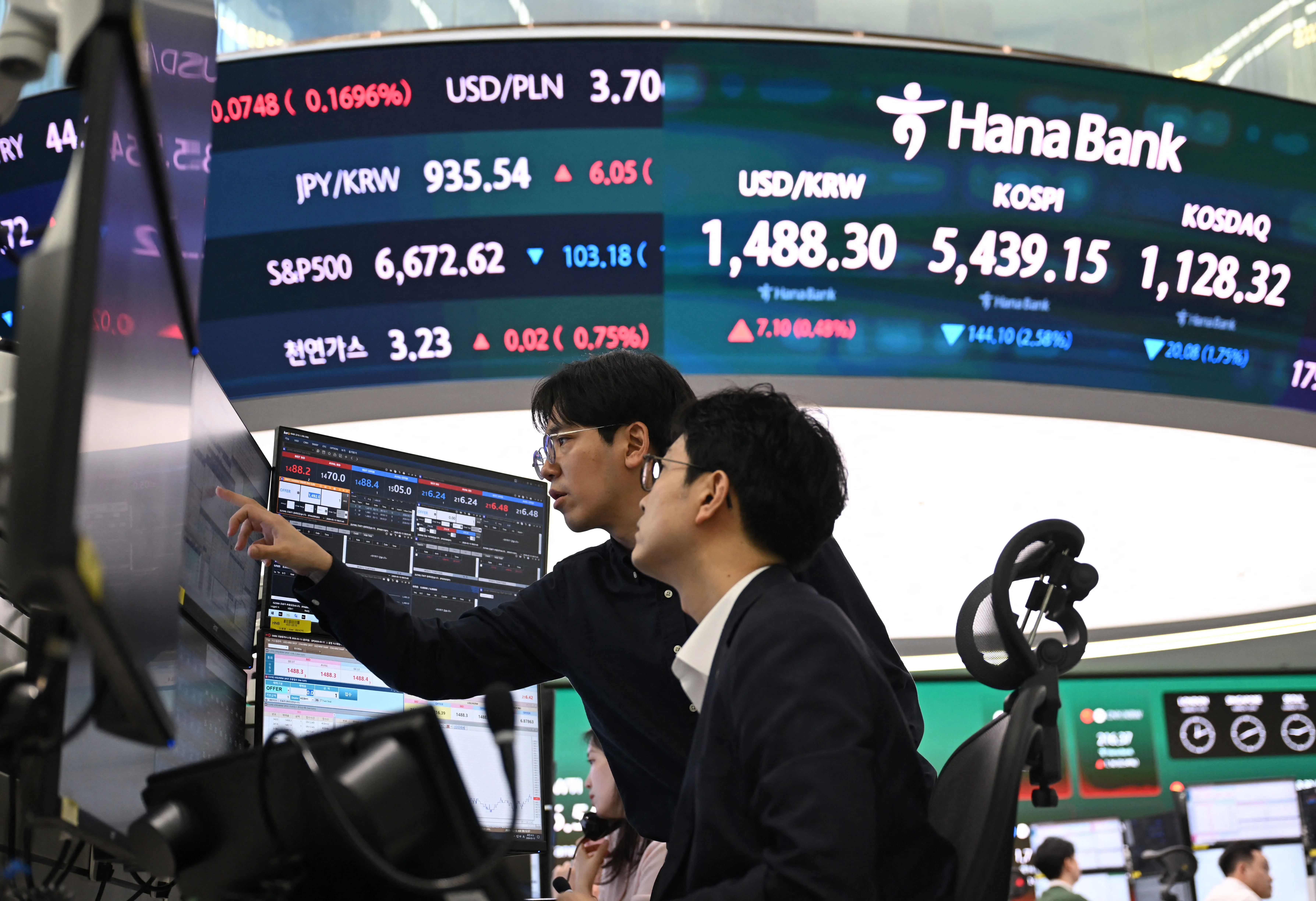
Asian stock markets recorded modest gains on Thursday as investors responded to a partial recovery on Wall Street. The improvement followed several difficult trading sessions that had raised concerns about the strength of the global technology sector and the amount of money being invested in artificial intelligence. Japan’s Nikkei index rose 1.6 percent, while South Korea’s main market gained 1.9 percent. Despite the positive movement, investors remained cautious because many regional markets were still showing substantial losses for November.
Technology shares continued to attract particular attention, especially after Nvidia lost ground following concerns raised by credit-rating agency S&P. The agency placed the company’s credit rating under review for a possible downgrade, pointing to weaknesses involving management and board oversight. Nvidia shares fell 3.9 percent on Wednesday, adding to the pressure on a company that has become one of the central players in the global AI industry. Investors are increasingly questioning whether the rapid expansion of AI infrastructure can generate enough long-term profits to justify the enormous financial commitments involved.
The wider economic picture has also become more complicated. US economic growth for the third quarter was revised upward to an annual rate of 4.3 percent, while core inflation remained at 3.3 percent. These figures have created uncertainty about the Federal Reserve’s next decisions on interest rates. Markets continued to expect a possible quarter-point increase in December, although expectations of a larger increase weakened after the recent stock-market volatility. Lower US Treasury yields also affected currency markets, helping the Swiss franc strengthen as the dollar lost some of its recent momentum.
Trade policy added another concern after the Trump administration proposed new tariffs on 14 trading partners, including China, Japan and the European Union. Economists warned that the measures could add some pressure to prices and keep inflation higher into next year, even though the proposed duties would not simply be added to all existing tariffs. Oil prices also moved slightly higher amid concerns about possible supply disruptions in the Middle East. The market recovery therefore remains fragile, with investors balancing improved economic figures against uncertainty surrounding AI spending, inflation, international trade and geopolitical risks.
