

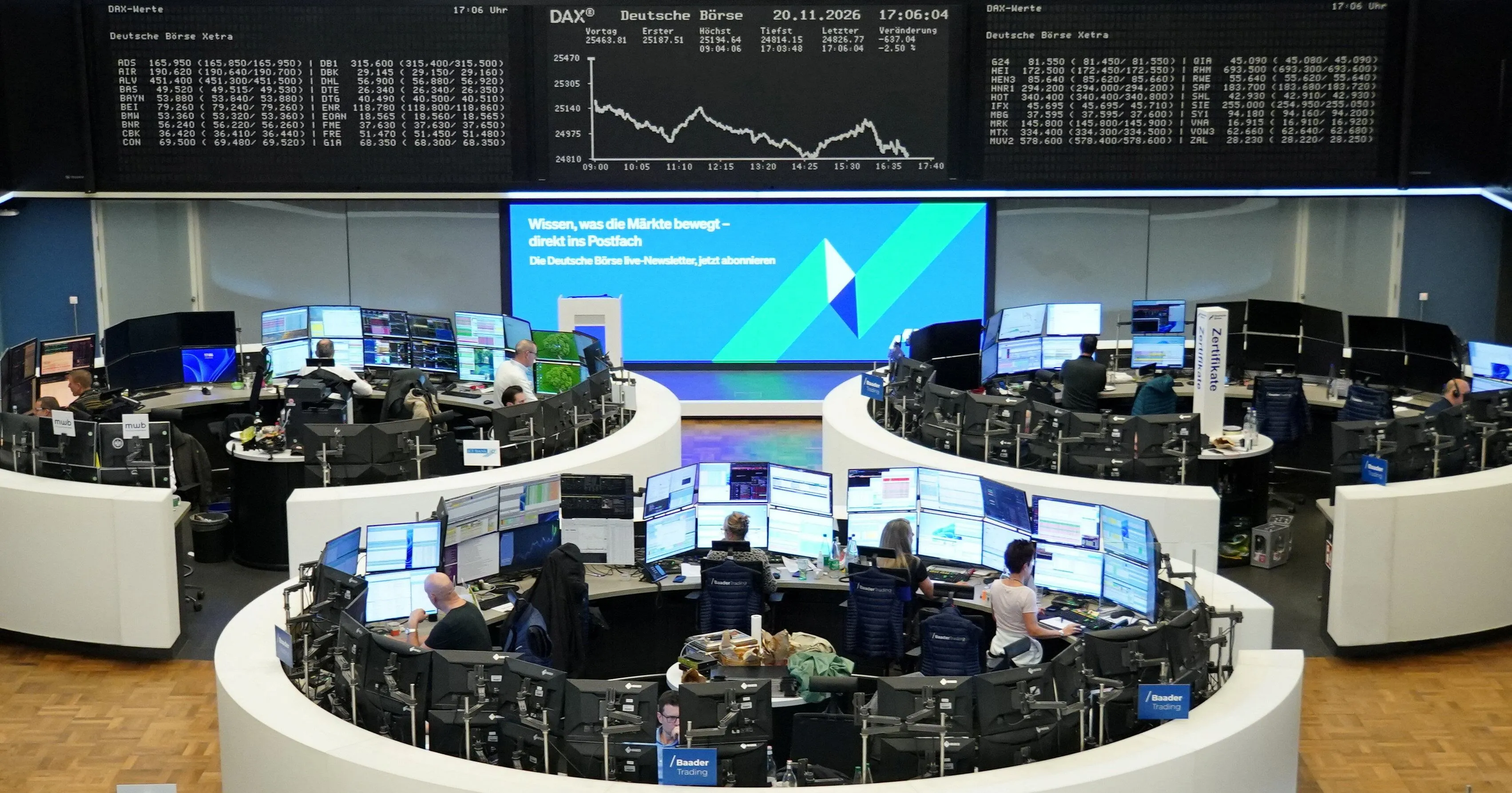
Global financial markets entered another uncertain week as investors continued to sell technology and semiconductor shares, raising fresh questions about the financial strength of the artificial intelligence industry. Markets in Taiwan, South Korea and the United States have suffered heavy losses during November, as traders reconsider whether the enormous spending on AI infrastructure can produce enough profit to justify current company valuations. The latest decline has made investors more cautious about businesses whose future growth depends heavily on artificial intelligence.
A major concern is the amount of borrowed money being used to build data centres and expand computing capacity. Technology companies and investors have committed huge sums to facilities designed to support advanced AI systems, but the financial returns may take years to arrive. Investors are now asking whether demand will grow quickly enough to cover construction costs, electricity expenses and debt payments. If companies fail to meet those expectations, the market could face a deeper correction.
The uncertainty has been increased by tensions between the United States and China, as well as political debate over the expansion of large data centres. South Korea’s government has repeated its willingness to support financial markets if conditions become more serious, while Taiwan’s financial regulator has tightened rules on short selling. Chinese stock exchanges have also announced measures intended to support trading activity and make it easier for investors to borrow money for share purchases. These steps show how seriously authorities are treating the recent market pressure.
US stock futures recovered on Monday after a difficult week, but investors remain focused on the next major economic signals. A key US inflation report due on Wednesday could influence expectations about the Federal Reserve’s next interest-rate decision. Higher borrowing costs would make expensive technology investments more difficult to finance and could place additional pressure on companies with ambitious expansion plans. For now, the AI industry remains a major source of investment and innovation, but markets are demanding stronger evidence that its rapid growth can produce lasting profits.
