

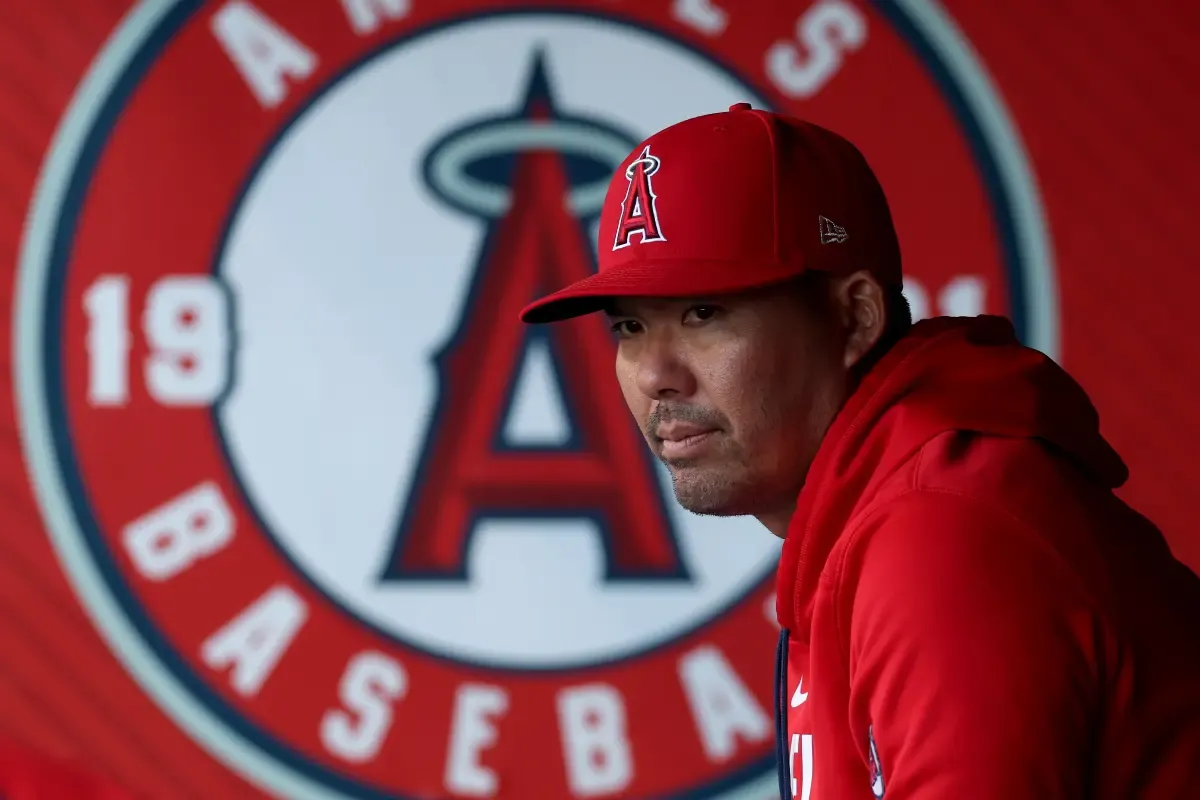
The Los Angeles Angels have dismissed manager Kurt Suzuki after a difficult season that ended with the team losing 100 games for the first time in franchise history. The decision was announced on October 21, when baseball operations consultant John Mozeliak said the club had declined the option on Suzuki’s contract for 2027. Suzuki was also offered the chance to remain with the organisation in a special assistant role.
The Angels finished the season with a 62–100 record and placed last in the American League West. The result continued a long period of disappointment for a club that has struggled to return to the playoffs. Suzuki’s only season as manager ended with the team facing questions about its coaching, player development and wider approach to building a competitive roster.
Suzuki had not managed a major league team before taking the job. He had played 16 seasons as a catcher, including the final two with the Angels in 2021 and 2022. Before becoming manager, he had worked as a special assistant in the organisation. His experience as a player and his relationships with teammates were seen as useful qualities, but the team’s record ultimately led to a change.
Mozeliak said Suzuki had earned respect in the clubhouse and that the final record did not fully reflect his abilities. The statement suggested that the decision was tied to the club’s need for a new direction rather than a simple judgment of Suzuki’s personal qualities. In professional sport, however, a poor season often brings changes because management must show supporters that it is responding to results.
The Angels are also preparing for a change in ownership. A deal for Stan Kroenke’s sports group to buy controlling ownership from Arte Moreno was announced in September, although the sale was not expected to close until the following year. The planned change has already affected the club’s future planning, with decisions about the manager and coaching staff taking place during a period of transition.
Suzuki’s dismissal is part of a wider pattern of instability. He became the seventh manager, including interim appointments, to lead the team in nine seasons after the departure of Mike Scioscia in 2018. The club had also recorded 11 consecutive losing seasons and missed the playoffs for 12 straight years. Those figures underline how deep the problem has become and why a single managerial change may not be enough to restore success.
The club’s next appointment will be important, but the new manager will need support from the front office. A stronger roster, effective use of performance data and a clear plan for developing younger players could all be needed. Fans will also want to see that the organisation can turn its resources into consistent results rather than repeat the cycle of changing managers without lasting progress.
For Suzuki, the offer to stay as a special assistant leaves open a possible future role within the club. For the Angels, the search for a new manager begins with a difficult task: rebuilding trust after another losing season. The challenge will be to create a stable plan that improves performance on the field and gives supporters a reason to believe the team can compete again.
