

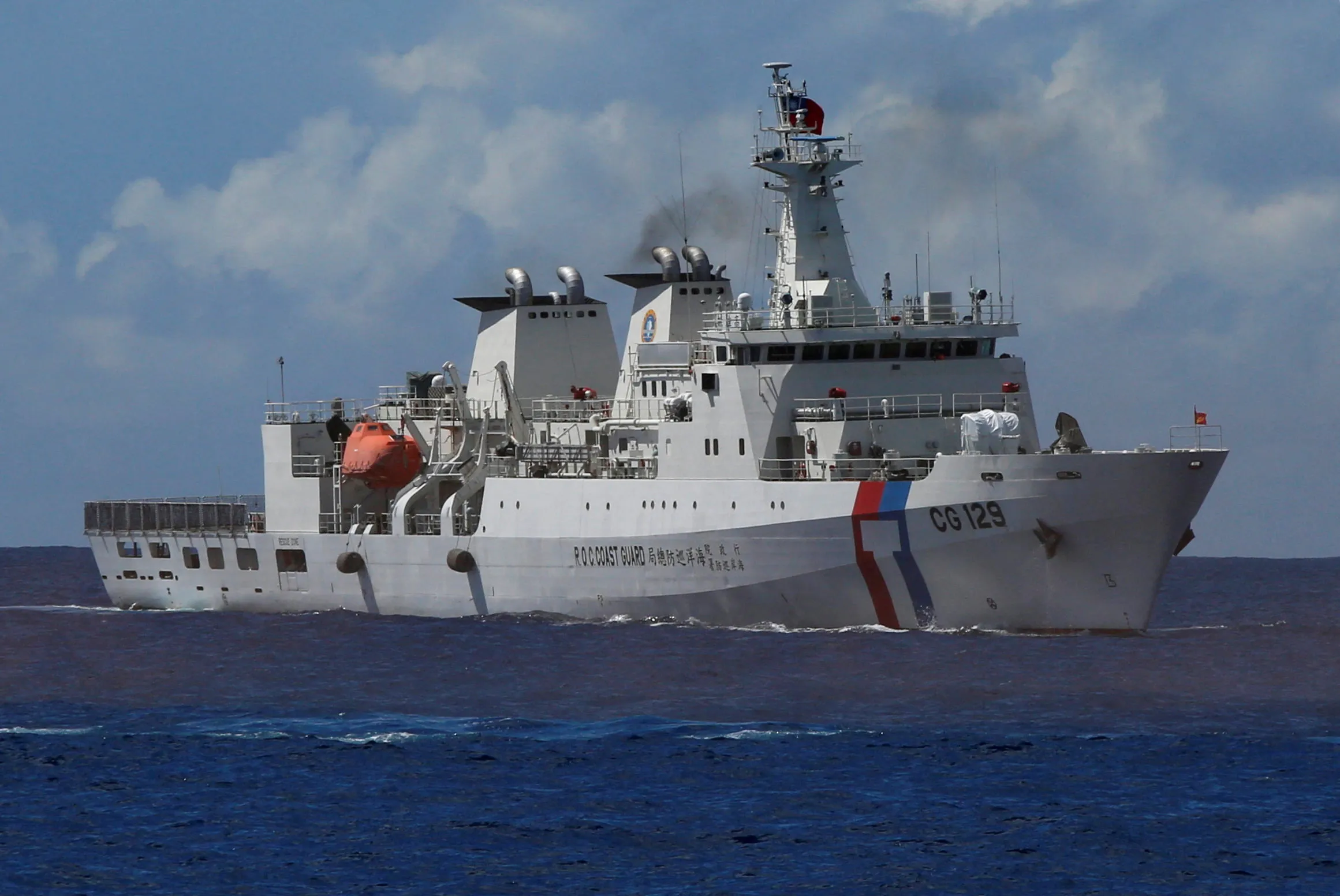
China and Taiwan faced fresh tensions on Wednesday, October 21, after Beijing defended its coast guard patrols around the Taiwan-controlled Pratas Islands in the South China Sea. Chinese officials said their ships were working to protect order and safety in nearby waters. Taiwan, however, viewed the recent movements as part of a wider effort by Beijing to increase control over the waters and islands around the self-governed territory. The dispute has added to concerns about peace and security in the region.
China’s coast guard activity followed a dispute involving a Chinese fishing boat and Taiwan’s use of a water cannon. Beijing said Taiwan would have to bear the consequences of its actions. It argued that Chinese patrols were lawful and aimed at protecting the rights of people on both sides of the Taiwan Strait. Taiwan rejected that view and said the Chinese vessels were acting in a provocative way. The two sides continue to hold very different views on who has authority over the waters.
The Pratas Islands are also known as Dongsha. They lie between southern Taiwan and Hong Kong, more than 400 kilometres from Taiwan’s main island. The atoll has no permanent civilian population, but its location gives it strategic value. It sits in a busy part of the South China Sea, where fishing, trade, and military activity all matter. Its distance from Taiwan’s main island could make it harder to defend if a serious crisis were to develop.
China claims Taiwan as part of its territory and has not ruled out the use of force to bring it under Beijing’s control. Taiwan is governed by its own elected leaders and has its own armed forces and public institutions. Its government says the future of the island must be decided by its people. This long-running disagreement has shaped relations between the two sides for decades and remains one of Asia’s most sensitive political issues.
Taiwan has become increasingly worried about China’s use of coast guard vessels for patrols around the island and nearby waters. Such ships are officially used for law enforcement, but their presence can also serve wider political and security goals. By sending vessels into disputed areas, Beijing can seek to show that it claims authority there without sending warships into a direct military clash. Taiwan fears that repeated patrols could slowly change the situation on the water.
Taiwan’s Mainland Affairs Council said Beijing was trying to create the impression that it already had legal control over waters and islands around Taiwan. Its head, Chiu Chui-cheng, warned that China could become more forceful in trying to exercise authority before achieving its stated goal of national unification. The warning reflected concern that China may use repeated patrols to make its claims appear normal. Taiwan sees this as a threat even when the ships do not open fire.
The dispute comes as China prepares for another major political period under President Xi Jinping. Xi is expected to seek confirmation for a fourth term in the country’s top leadership next year. Chinese leaders have repeatedly said that national unification remains a central goal. Taiwan’s leaders, meanwhile, have stressed that their people should be free to decide their own future. These positions leave little room for an easy settlement, and each new encounter at sea can deepen distrust.
The wider South China Sea is also claimed in part by several other governments. It is an important route for international trade, fishing, and energy shipments. Disputes over islands and waters have often led to diplomatic protests and increased patrols. Any clash involving Chinese and Taiwanese vessels could draw attention from other regional powers and affect wider security ties. For this reason, governments across Asia watch developments around the Pratas Islands closely.
For now, both sides are presenting their actions as lawful and necessary. China says its coast guard is maintaining order, while Taiwan says Beijing is using patrols to pressure the island. Neither side has indicated that it is ready to give up its wider claims. The immediate risk will depend on how vessels behave during future encounters and whether officials can avoid a dangerous mistake. Clear communication and restraint could help prevent a local dispute from turning into a larger crisis.
