

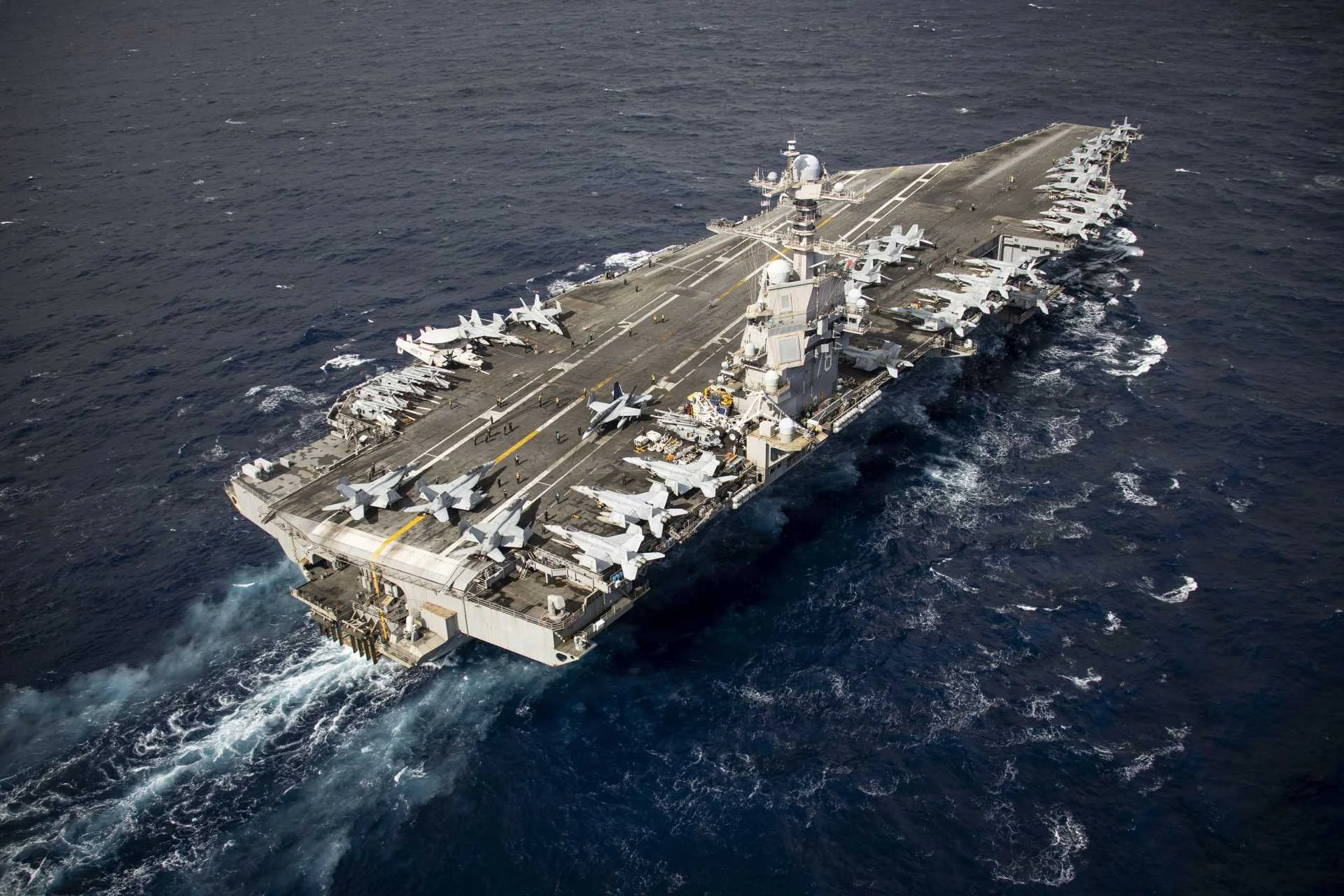
The United States has moved a third aircraft carrier toward the Middle East in recent days, a deployment that regional analysts say signals a significant potential escalation in the extended conflict involving Iran that has now stretched on for well over two hundred days. By the end of November, three American aircraft carriers along with two amphibious landing groups are expected to be positioned near Iran, representing one of the largest concentrations of American naval power deployed to the region since the conflict began.
This substantial naval buildup arrives alongside reports that approximately ten thousand additional American troops have been positioned within the broader region, further underscoring the scale of military resources the United States has committed to this ongoing standoff. Military analysts note that deployments of this magnitude typically signal either preparation for a significant escalation in military action, a demonstration of overwhelming force intended to pressure negotiations, or some combination of both strategic objectives operating simultaneously.
The timing of this expanded deployment coincides with a particularly tense diplomatic period, with American officials having recently rejected an Iranian proposal regarding the reopening of the Strait of Hormuz and reports suggesting the Iranian delegation to the United Nations General Assembly was asked to leave following the breakdown of sideline negotiations. This combination of military escalation and diplomatic rupture has heightened concerns among regional observers about where the conflict may be headed in the coming weeks.
Economic pressure on Iran has reportedly intensified considerably during this same period, with the Iranian currency reaching record lows against the dollar and inflation figures climbing to levels that officials describe as creating severe hardship for ordinary Iranian citizens. American officials have pointed to this economic deterioration as evidence that continued pressure, including this expanded military presence, could eventually force Iran back toward more serious negotiation, even as the human and financial costs of the extended standoff continue mounting on multiple fronts.
Regional allies have shown mixed reactions to this military buildup, with some Gulf states expressing quiet support for continued pressure on Iran while others have voiced concern about the potential for further regional instability should the conflict significantly escalate beyond its current scope. Saudi Arabia has separately committed substantial financial support to Yemen’s government forces fighting against Iran-backed Houthi militants, illustrating how the broader regional conflict continues drawing in multiple parties beyond the primary American-Iranian standoff.
Military logistics experts note that sustaining three aircraft carrier groups in a single region for an extended period represents a significant and costly commitment of American naval resources, typically reserved for situations where officials anticipate either sustained military operations or an extended period of heightened deterrent posture. This scale of commitment suggests American military planners are preparing for multiple potential scenarios, ranging from continued standoff to significant escalation, depending on how diplomatic efforts in the coming weeks ultimately unfold.
As this expanded military presence continues building in the region, the fundamental question of whether the conflict moves toward further escalation or eventual negotiated resolution remains genuinely uncertain. The coming weeks, encompassing both this military buildup and whatever diplomatic efforts continue in parallel, are likely to prove decisive in determining which direction this extended and costly standoff ultimately takes.
