

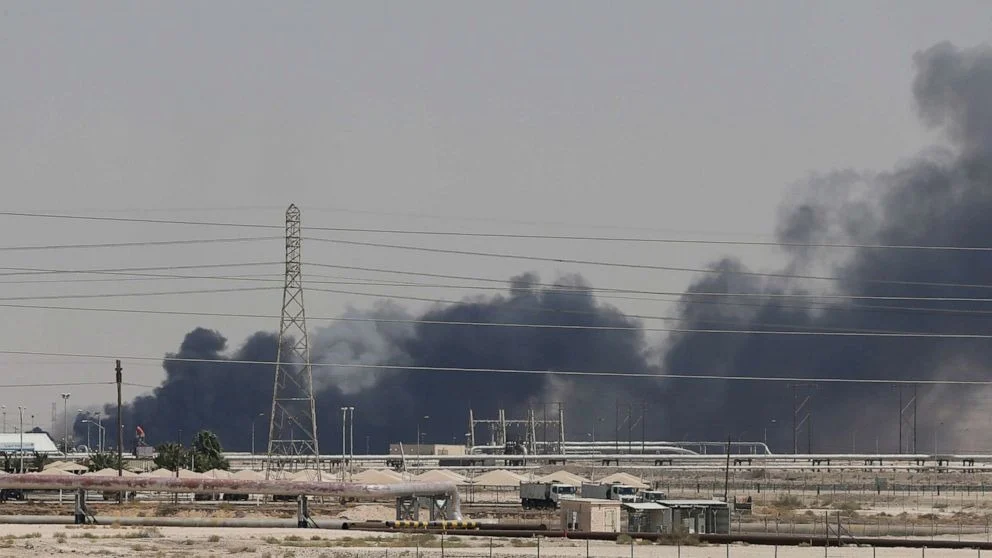
Oil prices climbed sharply after a strike hit near a major airport in Saudi Arabia. Traders reacted quickly to fears about disrupted energy supplies. Markets have been on edge for weeks over rising tension in the region.
The global oil benchmark rose close to 100 dollars a barrel following the news. U.S. crude prices also moved higher during the trading session. Analysts said the strike added new uncertainty to an already tense energy market.
The incident happened near a fuel storage area at the airport. Large plumes of smoke were visible for hours afterward. Flight schedules in the area were disrupted as authorities responded to the incident.
This is not the first energy-related shock the region has faced this year. A separate attack on a major pipeline earlier this month forced a lengthy shutdown. That pipeline carries millions of barrels of oil each day to export ports.
Energy analysts say repeated attacks are raising the risk premium built into oil prices. Traders now factor in the chance of further disruption when pricing contracts. This has kept prices elevated even during quieter trading periods.
Some analysts believe prices could climb even higher if attacks continue. One senior commodity strategist has said prices could push well beyond current levels if the conflict deepens further. Markets are watching closely for any sign of further escalation.
Higher oil prices tend to ripple through the wider economy quickly. Fuel costs for airlines, shipping companies, and everyday drivers all move with crude prices. Diesel prices have already climbed to record levels in some markets.
The current tension stems from fighting between Yemen’s Houthi movement and a Saudi-led coalition. This conflict escalated sharply in recent months after a period of relative calm. Energy infrastructure in Saudi Arabia has become a frequent target.
Saudi officials have not fully detailed the extent of recent damage. They have said repairs to affected infrastructure are underway. Some analysts believe it could take weeks to fully restore normal operations.
Meanwhile, other producing nations are being watched for possible shifts in output. Any increase in supply from elsewhere could help ease price pressure. So far, no major producer has announced plans to boost output significantly.
Consumers are already feeling the effects of higher prices at the pump. Travel and shipping companies have also started passing on higher costs. Analysts expect this pattern to continue if tensions remain high.
Markets are now watching for the next update from Saudi officials. Confirmation of further damage or repairs could move prices again quickly. For now, uncertainty continues to drive volatility across global energy markets.
