

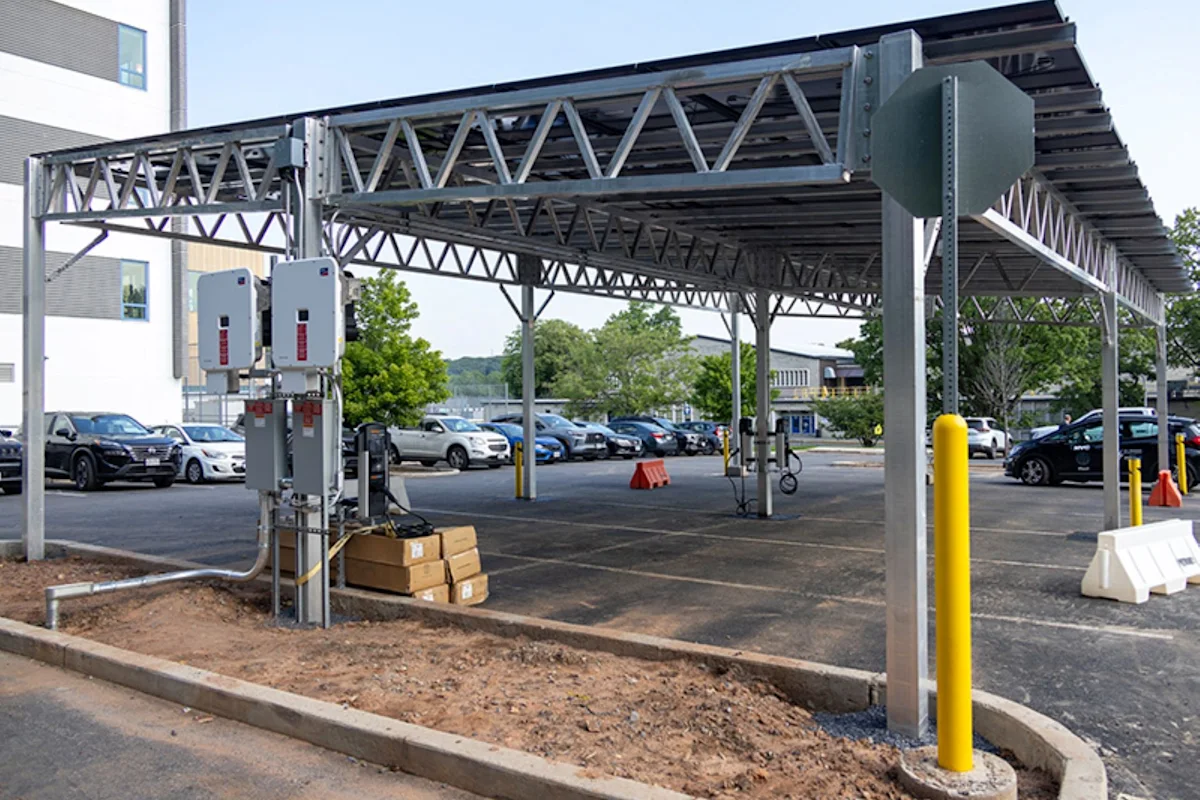
New York City has opened its first solar canopy EV charging station at a public school on Staten Island. The project combines solar power, electric vehicle charging and covered parking in one site.
The new station is at Michael J. Petrides School. It has six Level 2 charging ports for city electric vehicles and school use.
City officials see the project as more than a single charging site. They want to use it as a model for similar projects across New York City.
The project is the first completed under Local Law 63. The law passed in 2024 and created a pilot plan for solar canopies in all five boroughs.
The canopy is also the first solar canopy built on Staten Island. It adds clean power while giving parked vehicles shelter from sun and bad weather.
City officials said the project received more than $250,000 in funding. It also adds to a growing city charging network with more than 2,600 charging ports.
The city now has a municipal fleet of about 5,970 electric vehicles. More charging sites are needed as officials work to move more city vehicles away from gas and other fossil fuels.
Deputy Mayor for Operations Julia Kerson said the project has two main goals. It can help the city meet its climate targets while also lowering some energy costs.
The solar canopy can produce electricity during the day. That power can help charge vehicles and reduce the need for grid power at some times.
Grid power can still support the station when solar power is not enough. This includes overnight charging and times when vehicles need more energy than the solar system can provide.
The mix of solar and grid power can help keep city vehicles ready for work. This is important for fleets that support public services every day.
The project may also help cut pollution. Electric vehicles do not produce tailpipe emissions while driving, which can help improve air quality in busy areas.
The canopy itself adds another benefit. It can protect vehicles from strong sun, rain and other weather.
Keith Kerman, the city’s chief fleet officer, said the canopy will mainly support the city fleet. He said the project will help the city build the infrastructure needed for a larger electric fleet.
The site also shows how existing parking areas can serve more than one purpose. A parking lot can provide space for vehicles while also producing solar power above them.
This approach could help New York add renewable energy without needing large new areas of land. Solar canopies can turn parking spaces into small power sites while supporting electric transport.
The city also has another solar charging canopy at a Department of Correction site on Rikers Island. That site began service in 2022.
The Staten Island project expands the use of the idea in a public school setting. It also marks the first completed project tied to the city’s five borough solar canopy plan.
New York officials now want to build more sites on property controlled by the city. Parking lots and other public spaces could become locations for future solar canopies and EV chargers.
Louise Yeung, the city’s chief climate officer, said combining renewable power with EV charging can help reduce emissions. She also said the approach can make the city’s growing electric fleet more resilient.
The project comes as cities across the US look for ways to cut transport emissions. Government fleets can play a key role because they include many vehicles that travel every day.
For New York, the new Staten Island station is a small but visible step toward that goal. It shows how one site can support clean energy, electric transport, weather protection and public services at the same time.
The city plans to use the experience from the project as it looks at similar solar charging sites in other boroughs. If the plan expands, more public parking areas could become sources of renewable power for New York’s electric fleet.
