

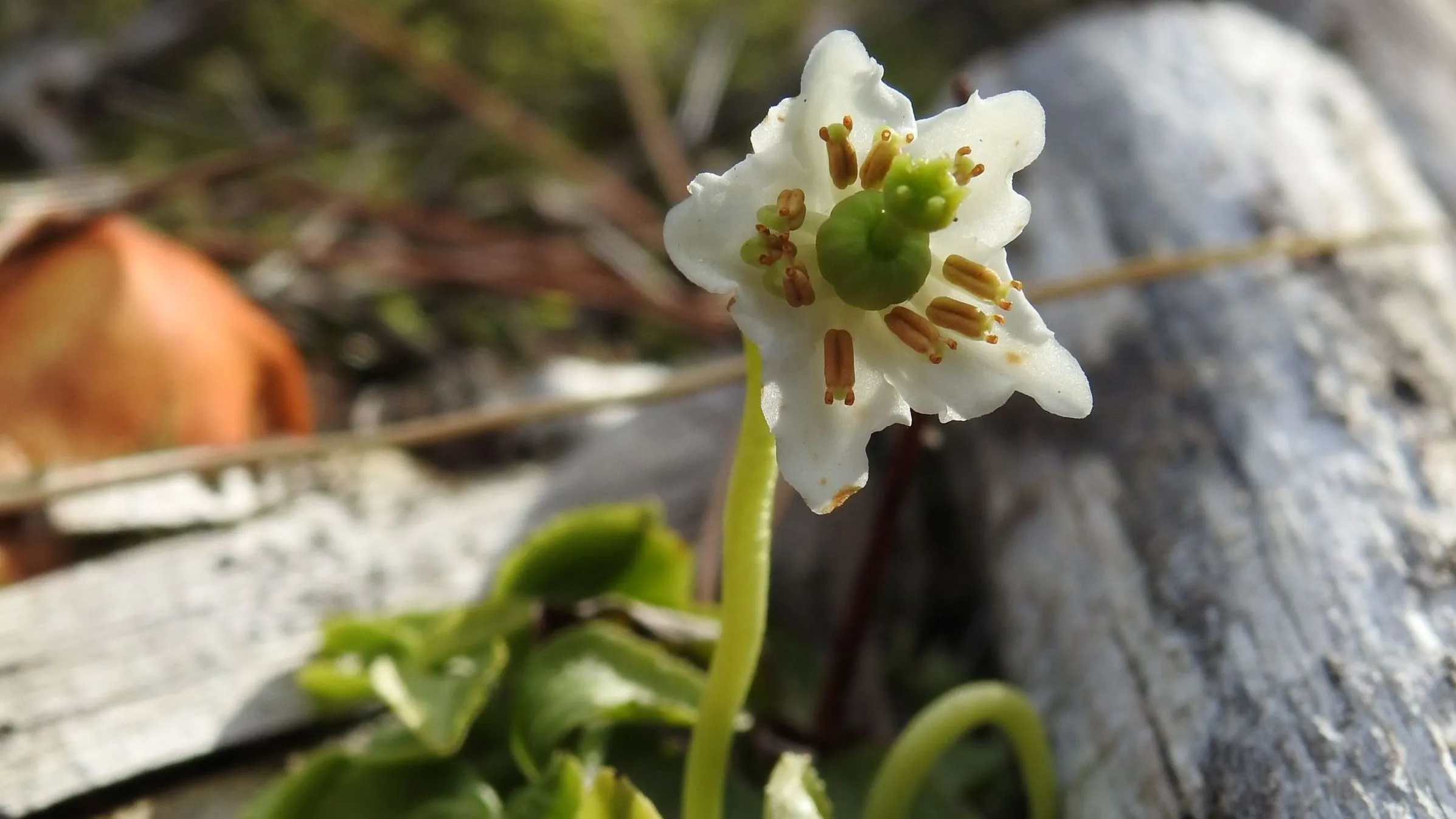
Conservation teams in Scotland have moved 3,400 rare wildflowers away from a coastal area where erosion threatened to destroy their habitat. The plants, known as one-flowered wintergreens, were growing at Culbin Forest in Moray. Parts of the shoreline have collapsed into the sea in recent years, leaving the small flowers at risk of disappearing from the site. The rescue project brought together conservation groups, government nature specialists and local volunteers to protect the plants before more land was lost.
The one-flowered wintergreen is a small plant with star-shaped flowers. In the United Kingdom, it grows naturally only in pine woodland in north-east Scotland. Its population has fallen sharply over the past five decades, and conservation groups say it now survives at only seven UK sites. Just three of those locations are believed to have healthy populations. The relocation effort required careful work because the plants depend on underground fungal networks that help them obtain nutrients and support their survival.
Volunteers therefore moved sections of soil around the flowers instead of simply pulling the plants out of the ground. This helped protect the delicate connections between the roots and fungi. Researchers say the species faces several pressures, including changes in forest management and hotter, drier conditions that reduce moisture in woodland soil. Scotland may still have tens of thousands of plants, but many are genetically identical because they spread through their roots. Conservationists hope the rescued flowers will establish themselves in safer areas and strengthen existing populations. They say the long-term result is not yet certain, but moving the plants gives them a better chance of survival.
