

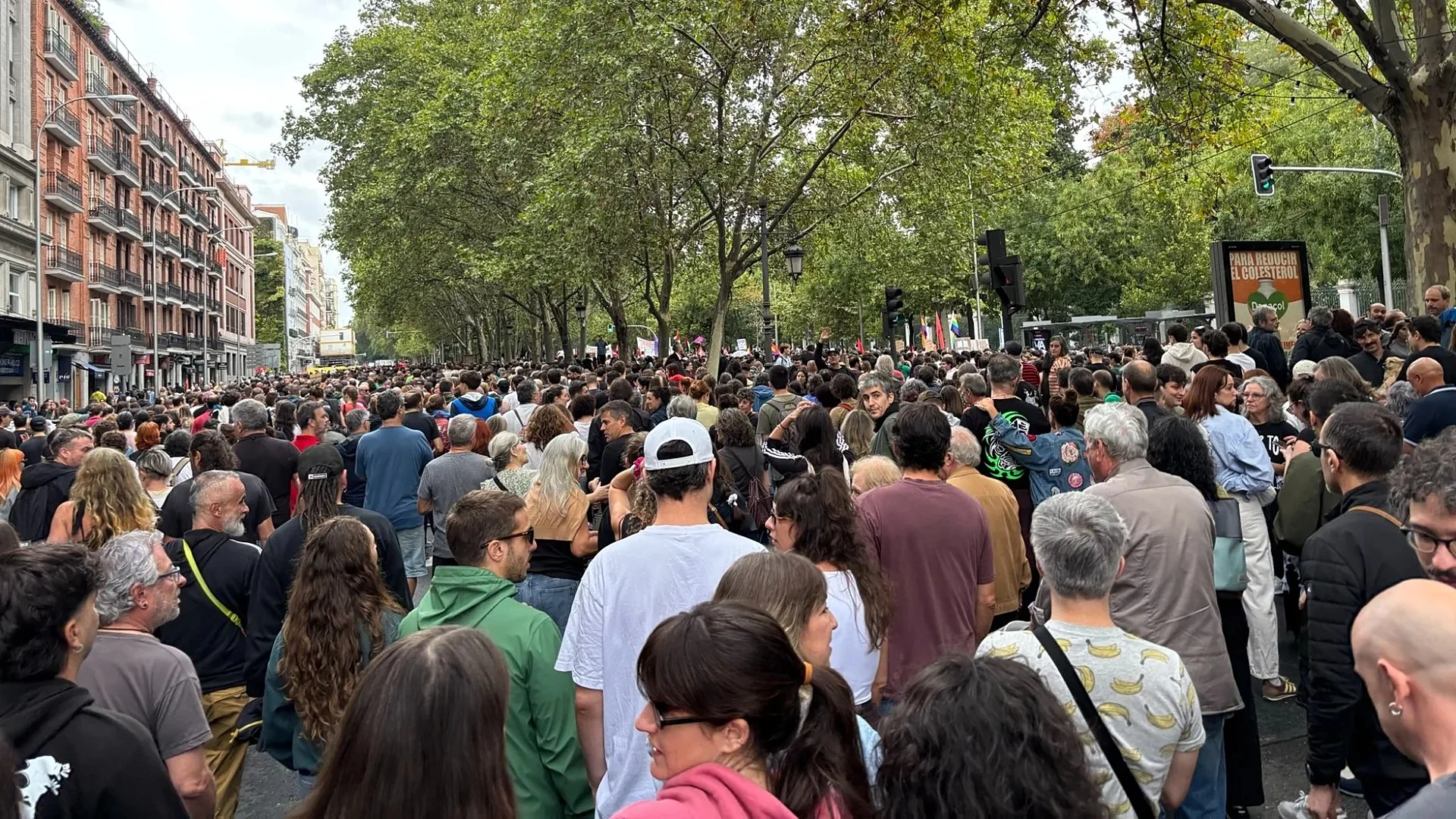
Tens of thousands of people filled streets across Spain as anger over high housing costs grew into one of the country’s biggest social protests in recent months. The demonstrations were reported on October 4 after large crowds gathered in Madrid and other cities to demand action from the government.
About 70,000 people joined the main protest in Madrid, according to the Spanish government. Demonstrations were also held in around 50 other cities. Many protesters called for stronger rules to protect renters and stop people from being forced out of their homes.
The protests followed a political defeat for the government. Measures aimed at easing the housing crisis were rejected in parliament. The failure added to public anger at a time when many families are struggling with high rents and limited access to affordable homes.
Housing has become one of Spain’s most important social issues. Rents have increased sharply in many parts of the country. Young people often find it difficult to leave their family homes, while older renters can face serious problems when landlords raise prices.
One case became a powerful symbol of the crisis. An 87 year old woman in Madrid was forced to leave her home after facing a major rise in rent. Her situation drew national attention and helped fuel the protests.
Demonstrators in Madrid carried signs calling for stronger government action. Some also called for a general strike if political leaders fail to respond. The message was clear: housing should be treated as a basic need rather than only as an investment.
The protests were mostly peaceful, but there were clashes in Valencia. Police used rubber bullets and tear gas to break up some demonstrations. A group of protesters entered the City of Arts and Sciences before police removed them.
In Madrid, police also dealt with far right activists who tried to confront people taking part in the housing protests. The government said some members of the group made Nazi gestures. Several people were arrested.
The housing problem has also become a political threat for Prime Minister Pedro Sanchez. His government has tried to introduce new measures, but opposition parties have blocked key proposals. The political fight has raised questions about whether Sanchez could call an early election.
The debate is not limited to Spain. Housing costs have risen in many European cities. Tourism, short term rentals, limited new construction and high demand have all contributed to pressure in major urban areas.
Spain has also seen strong growth in tourism. The sector creates jobs and brings money into local economies, but it can make housing more expensive in popular areas. Residents in some cities say homes are being turned into holiday rentals while local workers struggle to find places to live.
The October 4 protests show that the issue has moved beyond normal political debate. It is now a daily concern for many families.
The government faces pressure to increase housing supply while also protecting renters. Protesters want faster action, but any solution will take time.
For Spain, the housing crisis is becoming both an economic and social test. The size of the protests suggests that voters may continue to demand answers until they see real changes in rent prices, housing supply and tenant protection.
