

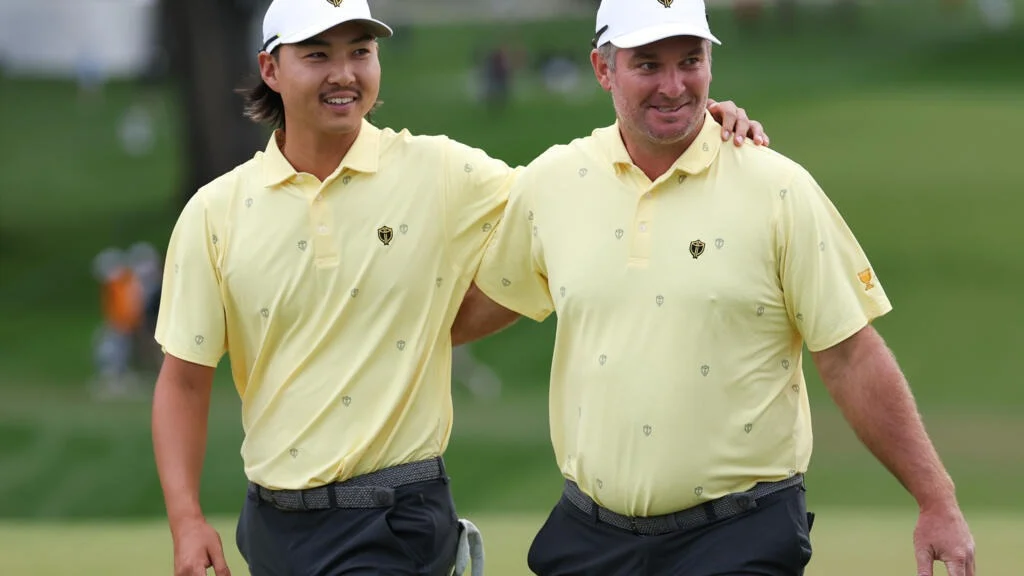
The International team delivered a stunning session sweep in Friday’s foursomes matches at the Presidents Cup, claiming all five available points and dramatically shifting momentum in what had previously been considered a heavily lopsided competition favoring the American squad. This remarkable turnaround came after the United States had opened the tournament with a strong three-to-two advantage following Thursday’s fourball session, making Friday’s complete reversal all the more striking given the historical dominance the Americans have shown in this event over recent editions.
The sweep gives the International team, captained by Geoff Ogilvy, a significant overall advantage heading into today’s fourth session of competition at Medinah Country Club, a development that has injected genuine drama and uncertainty into a tournament that many observers had expected to follow the now-familiar pattern of American dominance established over ten consecutive prior editions of the biennial competition. Golf analysts covering the event have noted that this represents the second consecutive Presidents Cup in which Friday’s session has delivered a significant sting for the American side, suggesting a potentially meaningful shift in how competitive this event might prove going forward.
American captain Brandt Snedeker now faces considerable pressure heading into today’s fourball matches, needing to find pairings and strategic adjustments capable of stemming the International team’s newfound momentum before it potentially becomes decisive heading into Sunday’s climactic singles matches. Snedeker’s team, built around a roster featuring world number one Scottie Scheffler alongside numerous other major champions, entered the week as substantial favorites, making Friday’s dramatic session sweep all the more significant a psychological blow heading into the tournament’s second half.
Today’s schedule features both a morning fourball session and an afternoon foursomes session, providing an unusually demanding double round of competition that will likely prove physically and mentally taxing for players on both sides. This intensive Saturday format, unique to the Presidents Cup among major team golf competitions, often proves pivotal in determining a tournament’s ultimate outcome, as it provides the final opportunity for meaningful point accumulation before Sunday’s winner-take-all singles matches bring the competition to its conclusion.
International team players have credited improved chemistry and more deliberate pairing strategies for their dramatic Friday turnaround, with several individual matches decided by relatively comfortable margins that reflected genuine dominance rather than narrow escapes. This kind of decisive performance across an entire session, rather than a collection of closely contested individual results, has led some analysts to suggest the International team may have found a genuine formula for sustained competitiveness that could extend well beyond this particular tournament.
The tournament’s overall stakes remain significant given the historical context of American dominance in this event, with the International team’s sole previous victory coming all the way back in 1998, the second edition of the competition. Should today’s sessions continue trending in the International team’s favor, this year’s tournament could represent a genuinely historic shift in a competition that has long been characterized by one-sided American success, adding considerable drama to what remains of this week’s competition at Medinah.
As today’s demanding double session gets underway, both teams enter with dramatically different emotional states following yesterday’s results, with the Internationals riding genuine momentum while the Americans look to regroup and respond. Golf fans around the world will be watching closely to see whether Friday’s remarkable sweep represents a genuine turning point in this year’s competition, or whether Team USA can find the response needed to reassert the kind of dominance that has defined this event throughout most of its recent history.
