

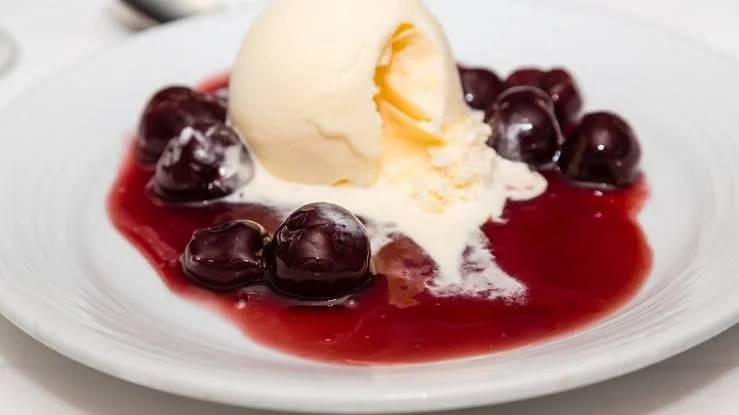
Today marks National Cherries Jubilee Day, a lighthearted culinary observance dedicated to one of the more theatrical desserts in classic cooking history. Cherries jubilee combines sweet cherries, often cooked down into a rich syrup, with a splash of liqueur that is then carefully ignited tableside to produce a brief but dramatic flame, before being served warm over vanilla ice cream. The combination of showmanship and flavor has made this dessert a memorable part of fine dining traditions for well over a century, and today’s observance gives home cooks and restaurants alike a reason to revisit it.
The dessert’s origins are widely traced back to a royal celebration held in Britain during the late nineteenth century, when a renowned chef reportedly created the dish in honor of a monarch’s milestone jubilee, giving the dessert both its name and its association with festive, celebratory occasions. Over the following decades, cherries jubilee became a staple of upscale restaurant menus, particularly during the mid-twentieth century when tableside flambeing was considered the height of elegant dining entertainment across many fine establishments in both Europe and North America.
Preparing cherries jubilee at home has become more accessible in recent years, as cooking publications and video creators have demystified the flambeing process for everyday cooks who might otherwise feel intimidated by the idea of igniting alcohol in their own kitchen. Basic safety guidance typically includes warming the liqueur gently before igniting it, keeping loose sleeves and hair away from the flame, and having a lid nearby to smother the fire quickly if needed, all of which make the technique far more approachable than its dramatic reputation might suggest to a first-time home cook.
Beyond the flambeed version, many home cooks today opt for a simpler, non-flaming adaptation of the dessert, reducing cherries and their juices with a bit of sugar and a small amount of liqueur or fruit juice for flavor, then spooning the warm sauce over ice cream without ever lighting a flame at all. This more accessible approach preserves the dessert’s signature sweet and slightly tart flavor profile while removing any of the safety concerns associated with the traditional tableside preparation, making it a practical option for family dinners or casual gatherings where a dramatic presentation is not the primary goal.
Nutrition-conscious cooks have also found ways to lighten the classic recipe without sacrificing its essential character, using reduced-sugar sweeteners or pairing the cherry topping with lower-fat frozen yogurt instead of traditional ice cream. Cherries themselves bring genuine nutritional value to the dish, offering natural antioxidants and vitamin content, which means that even an indulgent version of this dessert carries a bit more nutritional merit than many other classic sweet treats built primarily around refined sugar and cream.
Restaurants specializing in classic or nostalgic American and European cuisine have occasionally used days like today to bring cherries jubilee back onto seasonal dessert menus, appealing to diners interested in trying a dish more closely associated with earlier decades of fine dining history. Social media has also played a role in reviving interest in the dessert, as short cooking videos showcasing the dramatic flambe moment tend to perform well with audiences drawn to visually striking culinary content, introducing the dish to a younger generation that may never have encountered it on a restaurant menu.
As today’s lighthearted celebration continues, cherries jubilee offers a fitting reminder that some classic dishes endure not just because of their flavor, but because of the sense of occasion and theater they bring to a meal. Whether prepared with the traditional tableside flame or in a simpler, more practical stovetop version, the dessert remains a warm, comforting way to mark today’s small culinary holiday, connecting home cooks with a small piece of dining history that has delighted diners for well over a hundred years.
