

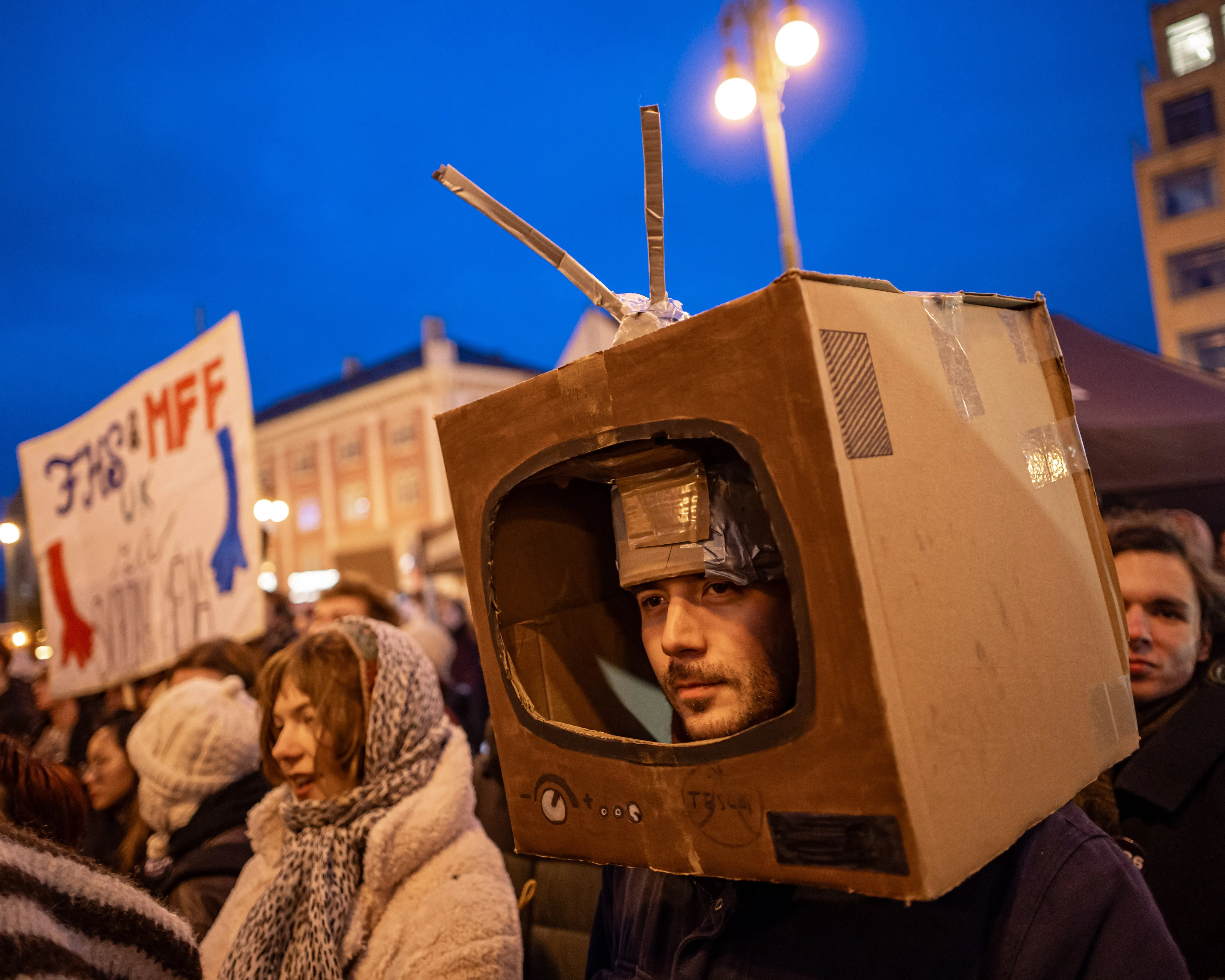
Hundreds of thousands of people are expected to gather in Prague for a major demonstration against the Czech government’s proposed changes to public broadcasting. Organisers say the protest could become one of the largest demonstrations in the country’s history. The movement is focused on a government plan to remove the licence fees that currently help fund Czech Television and Czech Radio and replace them with money from the state budget. Critics fear that the change could weaken the independence of public media and give politicians greater influence over news coverage.
The demonstration is another major challenge for Prime Minister Andrej Babiš and his coalition government. Public anger has grown after weeks of protests in towns and cities across the country. Employees at Czech Television and Czech Radio have also taken part in industrial action, warning that the proposed funding system could place their organisations under greater political pressure. Campaigners say independent public broadcasting is an important part of a democratic society because it helps journalists report on the government without depending directly on political leaders for financial support.
The group Million Moments for Democracy is organising the rally at Letná Plain, a large public area overlooking Prague’s historic centre. The organisers expect between 400,000 and 600,000 people to attend. Their campaign argues that the government is following a pattern seen in other Central European countries, where changes to public media have raised concerns about political control. International organisations representing journalists and broadcasters have also criticised the proposed reforms and warned that they could damage media independence.
Babiš has rejected the accusations and said the opposition is spreading false claims about the government’s intentions. He has argued that the changes do not amount to nationalisation and insisted that his administration will not interfere with editorial decisions. However, protesters say the financial structure matters because governments that control public broadcasting budgets may gain indirect influence over how news organisations operate. The size of Sunday’s demonstration could therefore become an important test of public confidence in the government’s promises and its approach to democratic institutions.
