

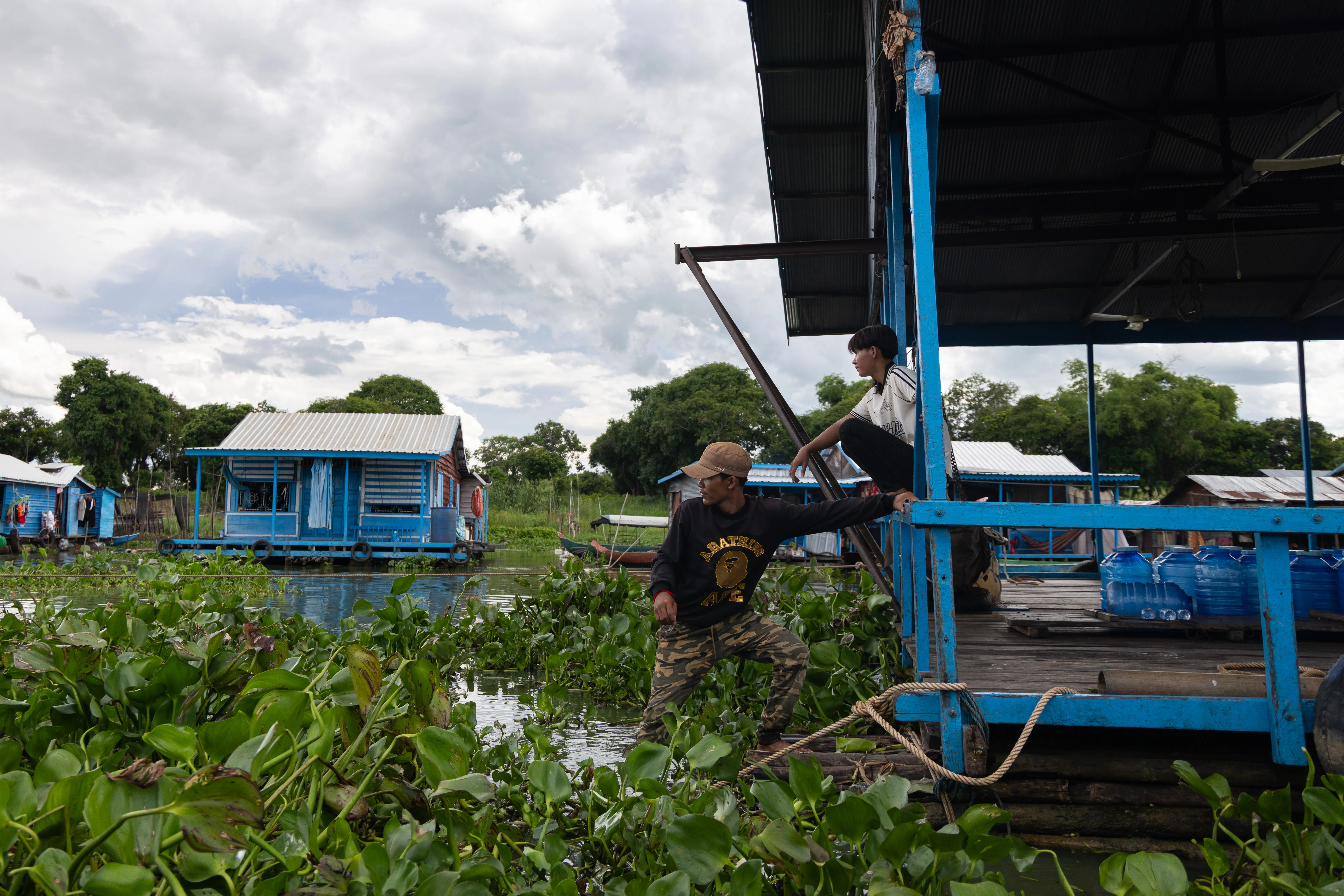
Communities living around Cambodia’s Tonle Sap lake are facing growing uncertainty as lower water levels, changing weather and declining fish catches threaten their traditional way of life. Around 1.5 million people depend on the lake, where many families live in floating homes that rise and fall with seasonal water levels. The lake normally expands during the monsoon season when water from the Mekong River flows back into it. This natural cycle brings nutrients into the water and supports one of the world’s most productive freshwater fisheries. However, the system is under pressure from changing rainfall, upstream dams and other environmental problems.
This year’s expected strong El Niño conditions could make the situation more difficult by bringing hotter and drier weather to the region. Water levels near the lake have already been recorded well below their usual seasonal averages. Lower water levels can reduce fish populations and make it harder for fishing families to earn enough money. The effects also reach people who depend on fishing businesses, including boat operators and sellers of equipment used to keep floating houses in place. Rising fuel prices have added another burden, making it more expensive for fishermen to operate their boats and transport their catches.
The lake is also important to Cambodia’s culture and history. Its seasonal floods support forests, wildlife and communities whose daily lives have developed around the water. Researchers warn that drought can reduce fish supplies, increase the risk of fires in flooded forests and make farming more difficult. Many families have few other assets or sources of income, leaving them especially exposed when fishing seasons are poor. Cambodia contributes only a small share of global greenhouse gas emissions, yet its communities face serious climate-related risks. Residents now hope for better rainfall, stronger environmental protection and more support to protect the lake’s future.
